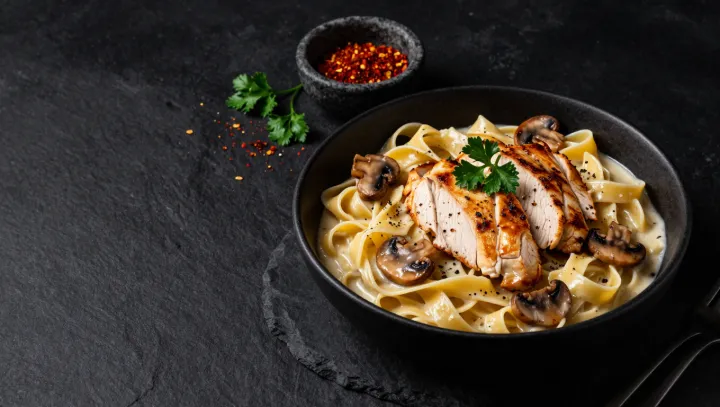
Steam lifting from baked macaroni and cheese hides a nutritional trick: the sauce is not merely fat and flavor, but a protein-bearing suspension built from milk and cheese. It looks indulgent. Yet a serving can carry more protein than its pale, yielding surface suggests, because several modest ingredients compound rather than compete.
The secret is almost unfair. Cheese supplies casein, whose micelles remain dispersed in sauce, while milk adds whey proteins and more casein; these sources raise protein density without requiring a separate meat component. Pasta is no bystander. Durum wheat contributes gluten proteins, and its starch gives the dish bulk, so protein can seem visually smaller than it is. That arithmetic matters more than appearance. A bowl dominated by starch and sauce can still stack dairy and grain proteins in the same forkful, creating a total diners often associate with visibly solid foods. Think of casein micelles as a background process: they quietly keep protein distributed through the sauce instead of presenting it as a visible chunk.
Texture is the real coup. Heat drives starch gelatinization in pasta and helps an emulsion form between dairy fat, water, and melted cheese proteins; that structure creates a silky coating while amino acids and salt intensify savory flavor. No compromise needed. Push this food science far enough, and comfort food becomes a programmable interface, able to tune protein, texture, and satiety without advertising the machinery.