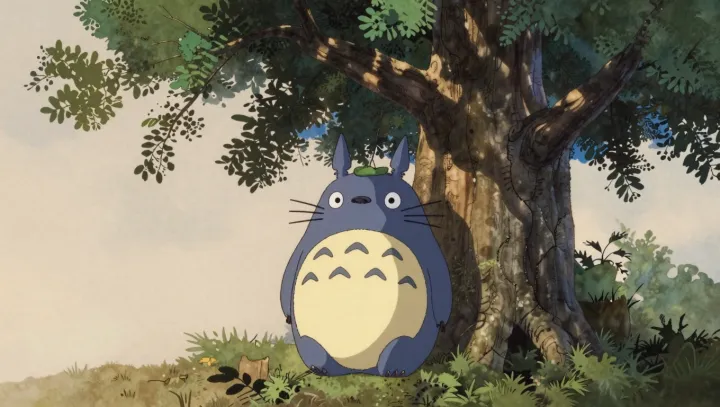
Totoro's stillness makes a sharper argument than any chase scene: childhood wonder begins when nature is allowed to be present without performing. The tree refuses to hurry. Beneath its broad canopy, the creature waits, while wind, rain, and scale turn an ordinary pause into an encounter; the child does not conquer a secret world, but enters one that was already there, indifferent and available.
This is why the scene feels honest rather than escapist. Attention restoration theory holds that soft fascination can replenish directed attention, and the tree offers exactly that: leaves, shadow, silence, and a body too large to explain away. Nothing needs solving. Its sensory detail works through environmental perception, where meaning arises from posture, sound, distance, and duration rather than from a lesson delivered aloud. The film trusts children to read those signals. That is demanding attention, because it asks the audience to remain with an image after plot has stopped asking for it.
Stillness is the trick. By withholding spectacle, Totoro makes the viewer notice how a trunk anchors space and how waiting changes scale; the creature becomes less an intruder from fantasy than an affordance, a cue that invites curiosity without prescribing it. Wonder needs no proof. It asks for the modest discipline of looking long enough that a familiar tree becomes strange, alive, and close. In that held frame, childhood is not escape from reality; it is reality before habit has taught the eye to pass it by.