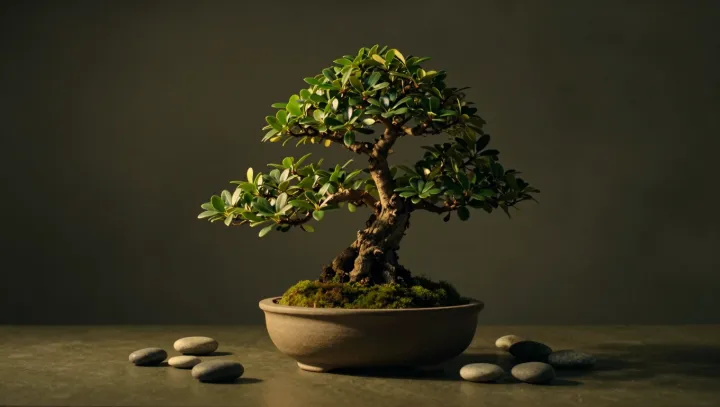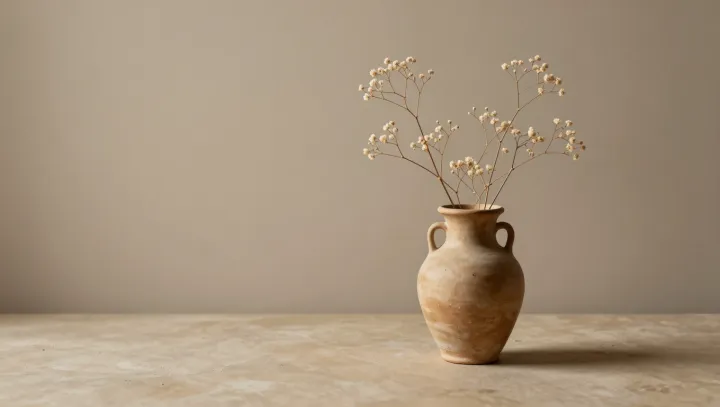
The gaps make the arrangement. Before the eye counts a single twig, it registers intervals of paper or wall, and those intervals decide whether the cluster breathes, buckles, or turns into a knot. Branches merely supply proof. In a balanced still life, their dark lines work less as objects than as boundaries drawn around silence.
Negative space is the stricter editor. Gestalt grouping explains why: perception binds separated marks into a unit, while figure-ground organization gives the surrounding field an active role rather than treating it as leftover emptiness. That field carries visual weight. When one opening is pinched or another spreads too wide, attention stalls, then slides toward an edge instead of circling through the arrangement. Rhythm follows the void. Painters often sense this before they can name it, because the empty shapes set the route of attention before texture, color, or botanical detail can intervene.
Restraint is the real craft. A painter who shifts one brittle stem by a finger-width changes several angles at once, altering tension, direction, and the rate at which the eye escapes. Less wood often wins. This is not decorative fussiness; because dried wood produces irregular silhouettes, balance arrives through measured intervals rather than matching forms. Measure the intervals. At rest, the branches seem to hold the air in place, yet it is the air that gives them their pose.