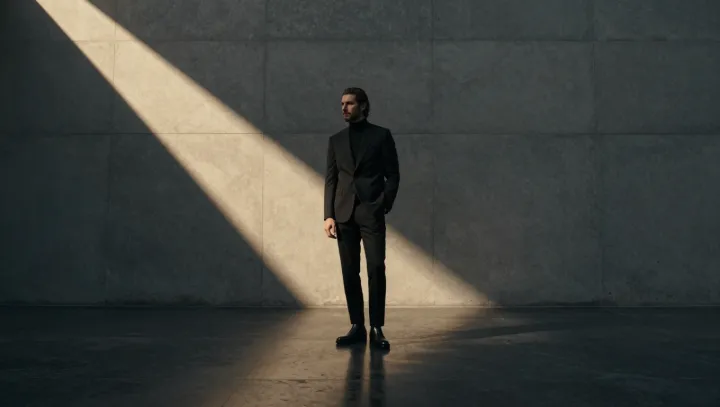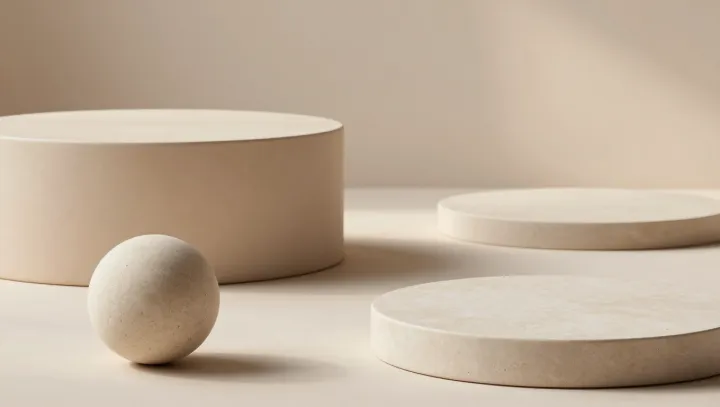
Warm light has become minimalism's quiet revolt. Across rooms once disciplined by white planes and sharp edges, it pools over limestone, brushed plaster, and rounded seating, making restraint feel inhabited rather than withheld. It is not decoration. The change recalibrates what absence can do when surfaces carry touch, shadow, and time.
Sterility was a bad bargain. Early minimal interiors often treated reduction as a visual audit: remove the object, erase the trace, flatten the mood. The bargain failed. That formula photographs neatly, yet it can leave domestic space emotionally underfurnished when every plane denies the body a cue for comfort. Soft radii alter the calculus. In furniture design, radius geometry disperses visual tension along an edge; in perception, haptic cues invite the eye to imagine contact before the hand arrives. Stone answers quietly. Veining, porosity, and mineral variation introduce materiality without crowding the room, while layered illumination--ambient, task, and accent light--gives blank space a pulse.
This is minimalism corrected, not abandoned. For architects and homeowners, the lesson is blunt: edit aggressively, then spend generously on texture, proportion, and lighting temperature. A sparse room need not perform deprivation. Nothing needs to shout. At dusk, its few forms can hold the light like a held breath, asking whether richness was ever a matter of quantity.