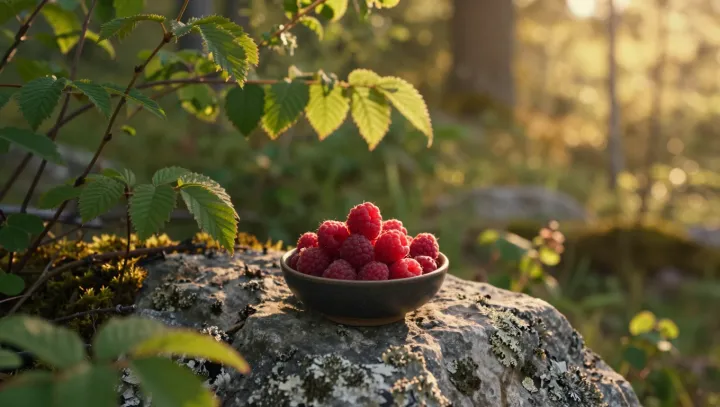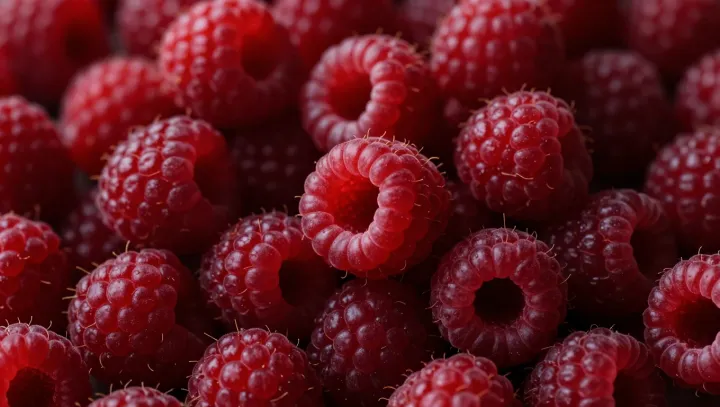
A ripe raspberry makes a persuasive little trick: what looks like one berry is an aggregate fruit, built from many drupelets that cling around a pale core. Now look closer. Each bead is a separate fruit with its own seed, and when the cluster slips free from its receptacle, the hollow center gives away the botany. You are eating a crowd, not a singleton.
That distinction is more than dinner-table trivia. Dietary fiber gives the fruit much of its practical force, adding bulk to the diet and helping slow the absorption of sugars, while vitamin C, or ascorbic acid, supports collagen synthesis and immune function. A small package. The red pigments include anthocyanins, and raspberries also contain ellagic acid; both are polyphenols under study for how they interact with oxidative stress and inflammatory signaling. No single compound deserves a magic-halo story: the fruit arrives as a matrix of water, fiber, acids, pigments, and seeds.
Do not let sweetness fool you. A raspberry can taste like a treat while delivering fiber and micronutrients that many snack foods leave behind, yet its appeal is not an excuse to treat any fruit as a cure. Keep the scale honest. Diet quality depends on the pattern of foods eaten over time, but this hollow cluster earns its place because it pairs pleasure with useful chemistry. The choice is yours. Will you still call it a berry?