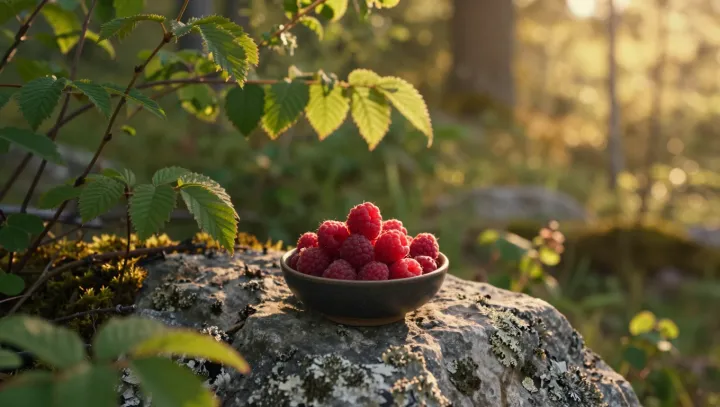
Under market light, a raspberry declares itself before its perfume does. Color speaks first. A red berry with saturated, even color usually signals sound handling, while dull maroon patches, pale spots, or white fuzz can point to bruising, dehydration, or microbial growth. Look closer. Firm, rounded drupelets should sit tightly together, not sag into gaps or shine with escaped juice.
Freshness is less romantic than shoppers pretend. The third clue is dryness at the stem end and beneath the berry: an intact calyx, a clean hollow center, and no pooled liquid suggest that cell walls have not begun to fail. The hollow center matters. Raspberries detach from the receptacle when picked, so an empty core is normal; a wet, mushy interior is not. Avoid fuzzy filaments and sticky seepage.
Visual inspection has limits. It cannot certify sweetness, pesticide history, or every pathogen, yet it can sort fruit likely to hold for a meal from fruit already declining. Turn the carton over. Leakage often gathers where it is least flattering, and one collapsed berry can stain its neighbors before their own tissue softens. In that small red architecture, freshness is a brief arrangement of color, tension, and air.