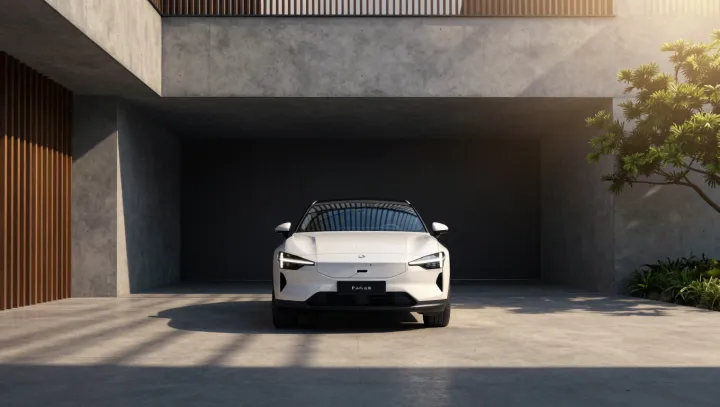
The battery sits low. That placement, more than the headline mass of an electric car, explains why a heavy vehicle can feel planted when it turns, because the battery pack occupies the floor rather than perching above the occupants. Weight is not destiny.
The usual intuition misleads. A lower center of gravity reduces the overturning moment generated during cornering: lateral acceleration acts through the vehicle mass, while tire contact patches define the base resisting roll. The body leans less. With less load transfer across an axle during a bend, the outside tires are less likely to bear a disproportionate share of the work, preserving a more usable grip balance before the driver senses a slide. That distinction matters. A car can feel composed not because it has escaped physics, but because its mass has been arranged to give the tires a steadier job.
It is no magic. Mass still raises inertia, so a heavier car demands more energy to accelerate and asks more of its brakes and tires when speed must fall. The penalty remains. Extra mass adds energy that brakes must convert to heat, and it can increase tire wear. Yet, by placing much of that mass beneath the occupants, engineers give suspension geometry and tire forces a body that resists rolling. Low beneath the cabin, the pack makes gravity an ally, though never a substitute for sound engineering.