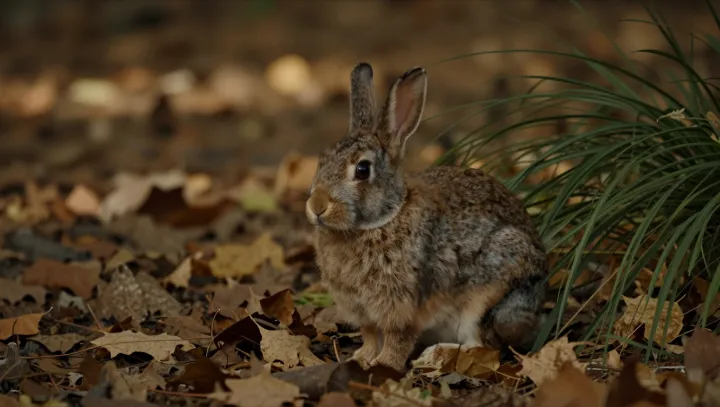
Stillness is the rabbit's sharpest disguise. Pressed into leaf litter, a rabbit can reduce the cues that make a predator's visual system separate body from ground: contour, motion, and contrast. Its mottled fur does not make it vanish. It makes recognition expensive. The effect is strongest when the ground supplies visual clutter, breaking the clean boundary a searching gaze wants.
The trick is less cowardice than sensory economics. Many predators rely on motion detection, whose retinal circuits respond strongly to a shifting edge; when the rabbit holds its posture, figure-ground segmentation can fail amid broken leaves and shadows. Yet the animal is not inert. Its pinnae swivel, collecting sound while the rest of the body avoids the muscular signals that would advertise flight. A twitch can settle the case. That split between immobility and listening reflects an old predator-prey contest, not a trance. Auditory localization lets a rabbit sample direction and distance without lifting its whole body into view.
This bargain has a hard limit. A motionless rabbit can be missed by an eye, but odor, close range, and a direct line of sight can defeat camouflage; freezing also delays escape when danger has already fixed its target. Wind can help by moving litter around it, but a sudden sound may force a choice between remaining unreadable and bolting. The strategy works only while the hunter's attention remains divided. What looks like passivity is a wager on uncertainty. In the leaf bed, the ears keep arguing with the silence.