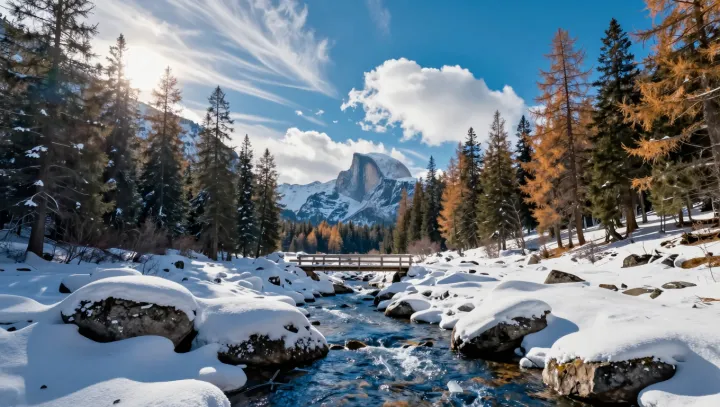
The open ribbon deceives. Beneath a forest packed with snow, a stream can remain exposed because its water column, though chilled at the surface, retains heat acquired from bed sediments and incoming groundwater rather than matching the air temperature at once. The sight confounds easy explanations. Motion distributes energy through the channel, but current alone does not grant immunity from ice.
Depth is the quiet advantage. A deep channel stores a larger volume below the ice-prone surface, and water's high specific heat capacity gives that volume thermal inertia, slowing cooling after a bitter spell arrives. Surface ice rewrites the exchange. When water freezes, latent heat is released, while the developing cover reduces heat transfer from liquid water to air; neither effect lasts forever, but both buy time. Density adds another defense. Freshwater reaches maximum density near four degrees Celsius, tending to leave the coldest water near the surface as the channel cools.
Flow gets too much credit. Fast water can resist a continuous lid by breaking thin ice and mixing water, yet shallow, exposed reaches still freeze when atmospheric heat loss outruns every source below. The streambed is no furnace. Yet sediment holds residual heat and groundwater often enters at a milder subsurface temperature, feeding the channel from below; under snow, open water becomes a narrow argument between winter air and heat that refuses to leave.