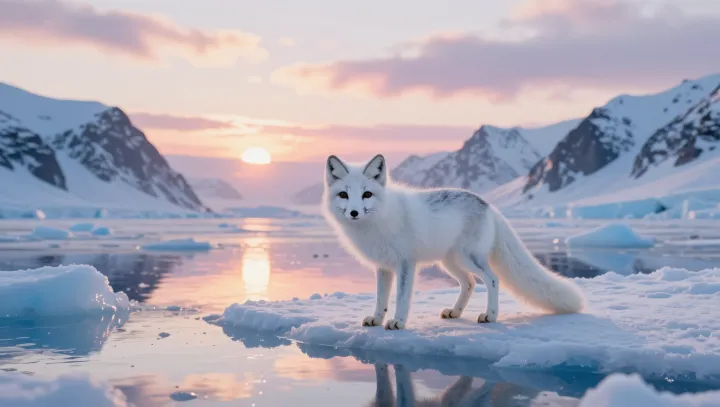
White is not decoration. An Arctic fox's winter coat turns the animal into a moving blank space against snow, reducing visual contrast for prey and predators while the seasonal molt replaces darker hair with pale pelage. The trick is timing. Camouflage is not merely concealment here; it is a field advantage, because a fox that is harder to detect can hunt with less warning and avoid becoming an easy target.
Density matters more. Beneath that white surface, exceptionally packed fur creates insulation by trapping still air close to the skin, where low thermal conductivity slows the transfer of body heat into the surrounding cold. Air does the work. The coat functions like a passive thermal firewall: its real mechanism is an insulating boundary layer that limits convection when Arctic winds try to strip warmth from the animal's body. That is clever engineering. Individual hairs create countless small pockets, disrupting airflow rather than allowing wind to flush cold air directly against the skin, while the fox's underfur supplies much of the thermal resistance. The system has limits. In hard wind, exposed areas such as the muzzle and paws still face heat loss, but the thick pelage gives the fox a biological defense that requires no fuel, switch, or shelter. Snow hides the hunter. Fur keeps it alive.