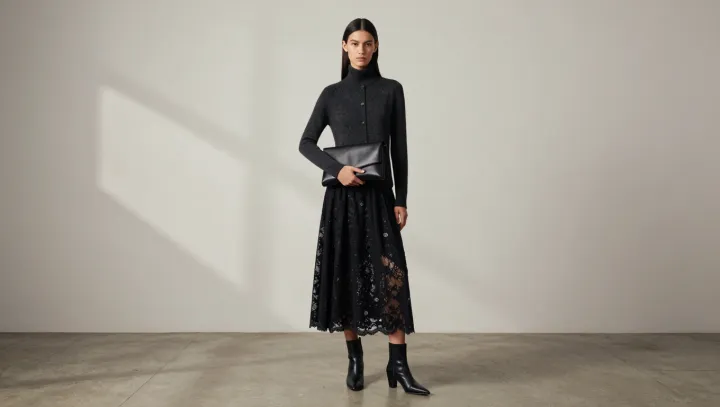
The drama starts above. A lace-edged mermaid skirt owes much of its apparent breadth to the narrow section above the knees, where the fabric follows the body before releasing outward. Restraint does the work. Against that fitted column, the flared hem appears wider than its dimensions alone might suggest. Lace supplies the punctuation. Its patterned edge gives the widening outline a delicate but legible finish.
Fit deserves first billing. In garment construction, the placement of the flare determines where the silhouette changes direction, while shaping through seams or darts controls how closely the upper skirt follows the hips and thighs without relying on decoration to establish its form. Movement exposes the bargain. A close fit around the knees can shorten the wearer's stride, so the pattern must balance that sculpted appearance with enough room for walking; the lace edging, however intricate, cannot compensate for a cut that restricts the legs.
Lace should earn attention. When its scallops extend beyond the underlying fabric, the edge becomes easier to distinguish, although the strength of that effect depends on the lace pattern, its color, and whatever sits behind it in the viewer's field of vision. Fabric changes the argument. A firmer cloth can hold the flare away from the legs, whereas a softer one falls into folds and reveals its width through motion; at rest, the narrow upper line remains, like a held breath before the hem opens.