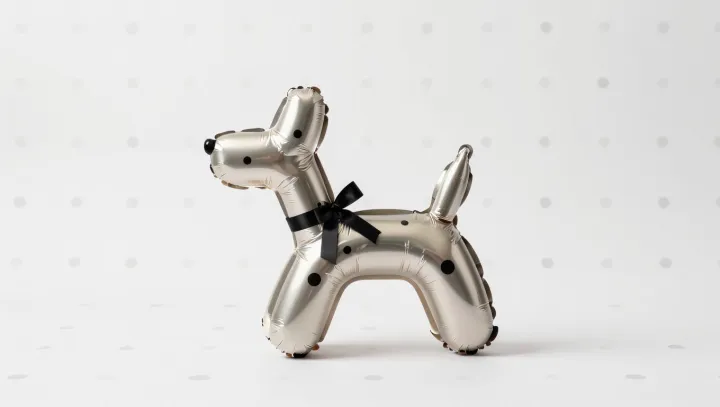
Shine proves no pedigree. A polka-dot satin puppy doll can gleam without containing a single silk thread, because satin names the arrangement of yarns rather than the material from which those yarns are made. Appearance is weak evidence. Beneath the glossy ears sits a distinction that product descriptions too often blur: weave versus fiber.
Structure deserves the credit. In a satin weave, yarns form floats that pass over several opposing yarns before interlacing, creating a face with fewer interruptions than a plain weave. Light meets fewer breaks. Those floats help produce the characteristic sheen, although fiber properties, yarn construction and finishing also affect how strongly the surface reflects light. Silk holds no monopoly. Polyester and other suitable fibers can be woven into satin, so a doll's glossy coat cannot establish its composition, price or quality by itself. Dots settle nothing either. A polka-dot pattern describes decoration, not the underlying fiber or the sequence of warp and weft interlacings.
Labels beat visual guesswork. A buyer assessing the puppy should look for a fiber declaration and care instructions, since the word satin alone says neither what the shell contains nor how the finished toy should be cleaned. Beauty has maintenance costs. Long floats can be vulnerable to snagging, while durability also depends on yarn strength, fabric density, seams and the demands of handling. Softness guarantees no safety. For a child's toy, secure attachments and appropriate safety information deserve attention independent of surface gloss, which cannot certify the stuffing or construction. The puppy keeps its sparkle, but the silk story remains unstitched.