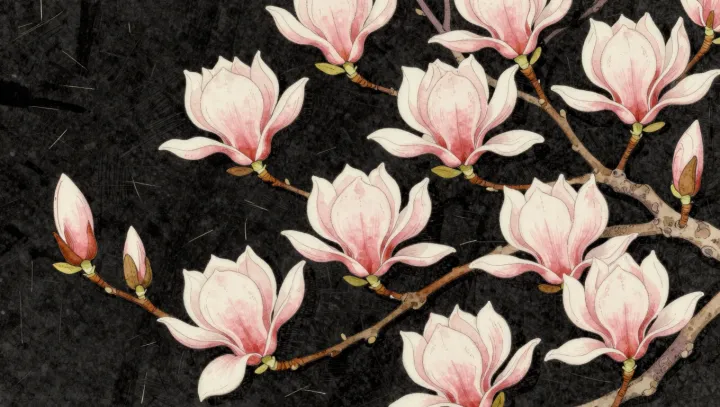
Spring has better choreography backward. On some magnolias, flowers open along bare, ink-like branches before leaves emerge, making the tree appear to have skipped the preliminaries and gone straight to its grand entrance. The absence does the work. Without foliage to interrupt the view, each pale cup stands against wood and sky with almost unreasonable clarity.
The spectacle runs on savings. Known as precocious flowering, this sequence depends partly on stored carbohydrates, which support developing flowers before new leaves begin contributing through photosynthesis. The buds start earlier. Flower buds form during the preceding growing season, then pass through winter dormancy until conditions permit development to resume, although the timing varies among species, cultivars and local climates. Not every magnolia obliges. Some flower with their leaves already present, so the bare-branch performance belongs to particular members of the genus rather than defining the entire group; even among early bloomers, weather can alter the overlap.
Such extravagance carries a liability. Once flowers open, freezing conditions can injure their tissues, turning petals brown even while the tree itself survives, which makes an early display a wager against the weather rather than proof that winter has surrendered. Shelter offers no guarantee. A planting site protected from cold winds may help, but a warm position can also encourage earlier development, exposing flowers when frost remains possible. The branches keep their composure. Beneath them, fallen petals can resemble scraps of an unfinished painting, while the leaves have yet to supply its green.