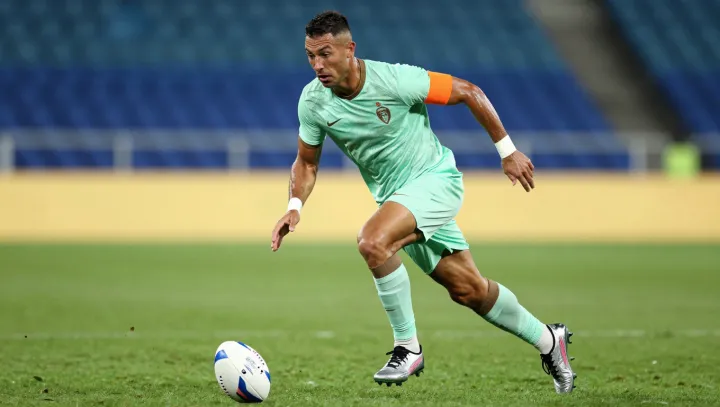
Space beats sheer speed. Cristiano Ronaldo's transformation from a winger who invited tackles into a scorer who escaped attention exposes a defender's awkward bargain: watching the ball means surrendering sight of the man. Absence becomes an advantage. Where his early attacks often demanded a dribble past an opponent, his later work increasingly involved arriving where that opponent could no longer intervene. The race starts elsewhere. Its finish is often decided before the cross leaves a teammate's boot.
Movement makes its own room. Through blind-side runs, Ronaldo positions himself outside a marker's immediate view, then changes direction as the defender turns toward the delivery. Timing punishes divided attention. A delayed run can exploit the gap between centre-back and full-back, while a near-post dart can pull coverage away from another attacker. Stillness also has teeth. By pausing rather than charging, a forward can remain available for cutbacks as defenders retreat toward their goal. Efficiency explains the shift. Ronaldo scored 450 goals in 438 appearances for Real Madrid, an output built on finishing as well as athleticism.
Speed remains an accomplice. Ronaldo's acceleration and jumping still help him convert openings, but neither requires him to beat a defender over a long distance. Distance is the expense. Starting closer to goal reduces the ground he must cover and lets teammates supply the penetration once provided by his own dribbling. Space is never free. It depends on service, coordinated movement and defenders whose attention can be drawn elsewhere. The winger sought confrontation. The scorer waits at the edge of another man's vision, where an empty patch of grass briefly belongs to nobody.