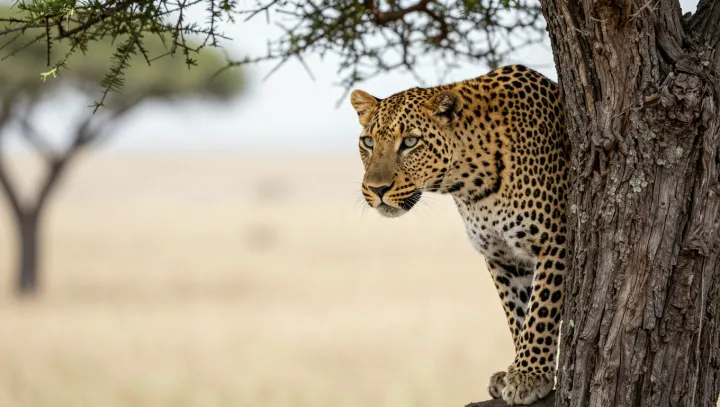
A leopard's kill is not yet its dinner, because lions and hyenas can steal the carcass before the hunter has eaten its fill. Height changes the odds. By hauling prey into a tree, a leopard puts food beyond the usual reach of competitors that can overpower it on the ground, turning a branch into a guarded pantry.
Theft makes hunting more expensive than it looks, since a stolen carcass erases much of the food reward without refunding the effort spent stalking and killing. Biologists call this kleptoparasitism. Leopards usually hunt alone, while lions and spotted hyenas may arrive with companions, making a fight over meat a poor bargain even for an armed and muscular cat. Climbing offers another option. With gripping claws, powerful limbs and strong jaws, leopards can carry substantial loads upward, sometimes hoisting prey heavier than themselves when the carcass and tree permit it.
A tree is insurance, not a guarantee, because lions can climb and an awkwardly placed carcass may still be reached or fall. Branch choice therefore matters. A fork that supports the load, especially beyond an accessible trunk, can make theft harder while allowing the leopard to return for repeated meals. Ecologists call this caching. Its value depends on local competition, available trees and prey size, so not every kill goes overhead, and the energy spent lifting must be weighed against the food protected. The prize is time. Below the branch, hunger waits for something gravity has not yet surrendered.