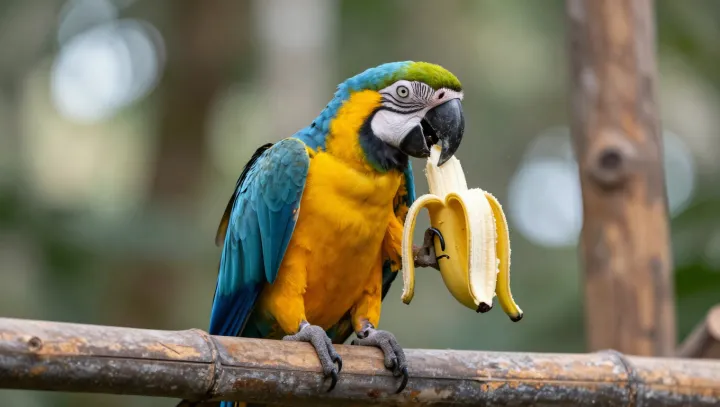
Waste can plant forests. Wild macaws, better known for cracking seeds with their powerful bills, also carry fruits away from feeding trees and discard seeds that remain capable of germination. Their mess has consequences. When a bird takes its meal to another perch, a seed it never eats may reach soil beyond the tree that produced it.
The distinction matters here. Not every seed meets the bill's crushing force: a macaw feeding on pulp can release an intact seed, while a dropped fruit may still hold its seed inside. Transport comes before disposal. Ecologists call this bill-mediated movement stomatochory, a form of seed dispersal that does not require a seed to pass through an animal's digestive tract. Distance changes the odds. Away from the parent tree, some seeds can escape concentrations of seed predators and pathogens, although their survival still depends on where they land and whether suitable moisture and light are available.
The gardener label needs restraint. Macaws also destroy seeds for food, so their contribution cannot be judged simply by counting fruits carried away; researchers must distinguish seed predation from delivery of viable seeds. A drop guarantees nothing. Germination, seedling survival and eventual tree establishment are separate hurdles, and a seed beneath a feeding perch may face competition or be eaten by another animal. Still, appetite creates opportunity. Beneath an abandoned meal lies the quiet reversal: a bird equipped to break a seed can instead give it somewhere else to begin.