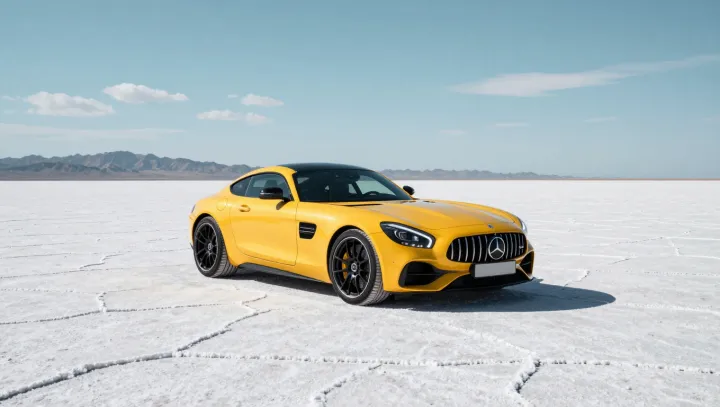
Heat earns its keep. In the Mercedes-AMG GT's twin-turbo V8, the turbochargers sit between the cylinder banks, where exhaust heat becomes a resource rather than merely something to remove. Distance becomes the enemy. This hot-V arrangement puts the turbines close to the exhaust ports, reducing the plumbing that separates combustion from boost.
The shortcut buys response. Because the exhaust manifolds feed turbines inside the V rather than routing gases toward outboard turbochargers, less intervening volume must be pressurized when exhaust flow rises. Heat matters here, too. Shorter passages limit heat loss before the gases reach the turbines, helping preserve exhaust enthalpy, the energy available to drive their rotation. Boost still needs work. Each turbine turns a compressor through a shared shaft, and that compressor supplies pressurized intake air, allowing more fuel to burn when the engine management system requests torque. Lag does not vanish. Rotor inertia and operating conditions still govern how quickly boost builds.
The bargain demands discipline. Concentrating exhaust hardware between the banks creates a severe thermal environment, so shielding, cooling and component protection must accompany the compact packaging. Intake routes move outward. That reversal separates the cooler intake side from the central exhaust hardware, although compressed charge air still needs cooling before entering the cylinders. Packaging also pays dividends. Keeping the turbochargers within the engine's upper envelope reduces its lateral spread compared with an arrangement that hangs them outside the banks. Nothing comes for free. Beneath the bonnet, the shortest route to urgency runs through the furnace.