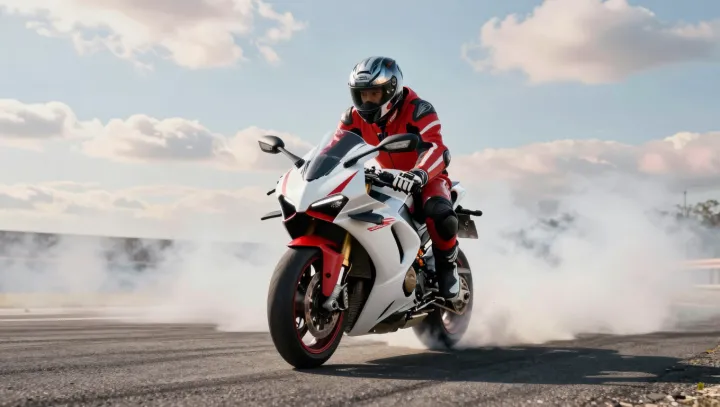
Horsepower loses to geometry. Where streets are packed and parking consumes money and time, a motorcycle's modest footprint can buy something a powerful car cannot: a practical place to stop. Space becomes the prize. The attraction rests less on speed than on spatial efficiency, because transporting one person need not require moving an entire cabin.
Cheap ownership compounds that advantage. Smaller commuter motorcycles generally require less fuel and lower purchase spending than cars, making them attractive where household budgets are tight and public transport leaves gaps. Parking carries opportunity cost. Every minute spent searching for a space is unavailable for paid work, deliveries, or family obligations, while a smaller vehicle can fit into designated spaces unavailable to cars. Access matters as much. Where lane filtering is legal, motorcycles can also pass stationary queues, although that benefit depends on street design, traffic rules, and rider behavior.
The bargain has limits. Riders lack a car's protective enclosure, and collision physics offers no discount for convenience: kinetic energy rises with the square of speed, increasing the energy a crash must dissipate. Smaller does not mean harmless. Exhaust emissions vary with engine technology and maintenance, while noise and pavement parking can transfer private convenience into public nuisance rather than solve a transport problem. Buses still move more. On heavily used routes, well-occupied public transport carries more people per unit of road space, leaving the motorcycle's appeal strongest where collective service falls short. The engine waits; the curb decides.