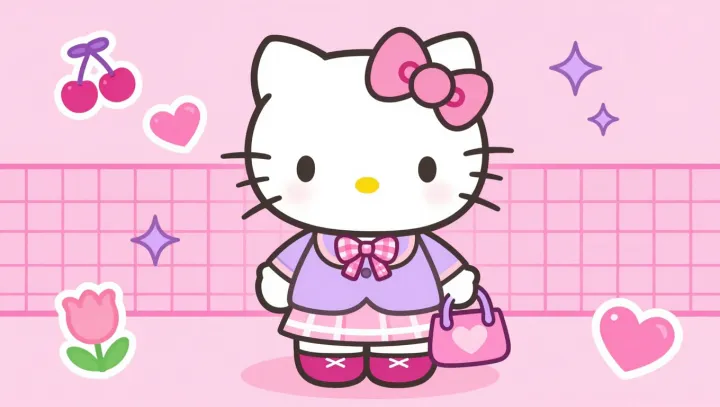
Hello Kitty's silence invites feeling. Her creators left her without a visible mouth so that fans could imagine her sharing their emotions, rather than encountering a character whose expression had already settled the mood. The omission does work. A smile would supply an answer; this face leaves the emotional reading to whoever is looking.
Restraint is the attraction. According to Sanrio's explanation of the character, Hello Kitty can seem happy when someone feels happy and sad when someone feels sad, making the missing mouth an invitation rather than an oversight. Nothing needs redrawing here. In character design, an expression can tell viewers what a figure feels; Hello Kitty instead allows the viewer's circumstances to influence that interpretation, without changing the familiar arrangement of eyes, nose and whiskers. The distinction matters emotionally. Her face does not insist on cheerfulness when a fan might prefer quiet company, nor does it prescribe sadness when someone wants celebration.
Familiarity need not dictate feeling. Hello Kitty retains a recognizable visual identity while leaving one expressive feature absent, separating the task of identifying a character from the experience of imagining her mood. That is the bargain. Fans receive a figure they recognize, yet the design leaves them room to supply something personal, whether they encounter her on a bag, a notebook or another everyday object. The stillness remains available. Where a drawn smile might keep announcing happiness, the space beneath Hello Kitty's nose can hold a feeling that belongs to someone else.