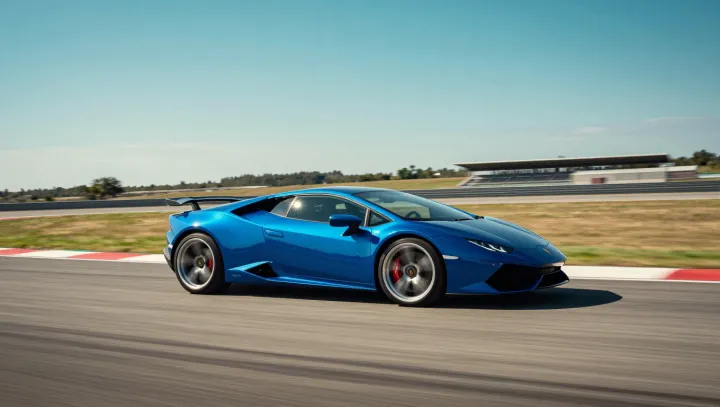
Agility need not mean nervousness. The Lamborghini Huracan Tecnica uses rear-wheel steering to change how its chassis responds, turning the rear wheels against the fronts at low speeds and with them at high speeds. Geometry does the work. Although the distance between its axles remains fixed, those steering adjustments alter its effective wheelbase, giving one car two distinct handling characters.
Less can feel livelier. At low speeds, opposite-phase steering helps the car rotate into a corner, reducing its turning radius and making tight bends demand less steering effort than they otherwise would. Think shorter, not smaller. This virtual shortening of the wheelbase increases yaw response, the rate at which the car turns about its vertical axis, without physically moving either axle. The distinction matters here. Rather than adding engine power or reducing mass, the system changes the relationship between front and rear tire directions, making the chassis feel more willing to turn.
Speed rewards restraint instead. At higher speeds, same-phase steering points the rear wheels in the same direction as the fronts, creating the effect of a longer wheelbase and moderating the car's rotational response. Stability replaces that eagerness. During a fast bend or lane change, this coordinated movement helps the car change direction with less abrupt yaw, reducing the nervous sensation that a highly responsive chassis can produce. Electronics manage the compromise. Lamborghini's vehicle-dynamics control coordinates rear steering with other chassis systems, adjusting its intervention to driving conditions rather than leaving one fixed response. The road bends; the temperament changes.