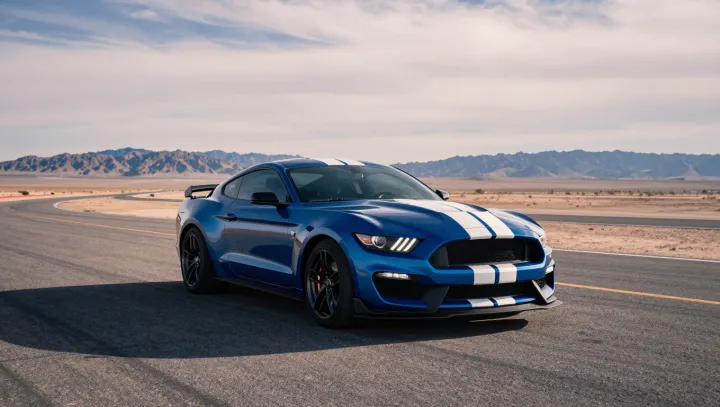
The Shelby GT500 makes power by giving some away. That is its bargain. A belt driven supercharger draws energy from the crankshaft, yet the air it forces into the V8 allows the engine to burn enough additional fuel to more than repay the cost. The result is a Cobra badged Mustang with track ambitions and a formidable appetite.
The arithmetic favors pressure. Forced induction packs more oxygen into each cylinder than atmospheric pressure alone can supply; with more fuel and appropriate ignition timing, combustion releases more energy on each power stroke. The supercharger itself takes a share of the output, but the net gain can be substantial. In one GT500 configuration, Ford rated the supercharged 5.2 liter V8 at 760 horsepower. That figure is the engine's rated output, not power before the supercharger's mechanical load.
Heat is the bill that arrives with the boost. Compressing air raises its temperature, making it less dense and increasing the risk of engine knock, so an intercooler cools the charge before it enters the cylinders. Fuel consumption rises under heavy acceleration, and tires and brakes must cope with the resulting speed. The GT500 answers with chassis and cooling equipment intended for demanding driving, though performance depends on conditions and configuration. The Cobra wears its contradiction openly: a machine that spends energy to make more, with heat as the price of admission.