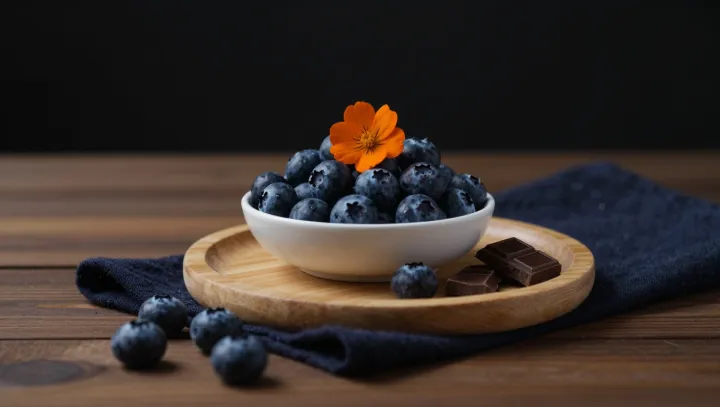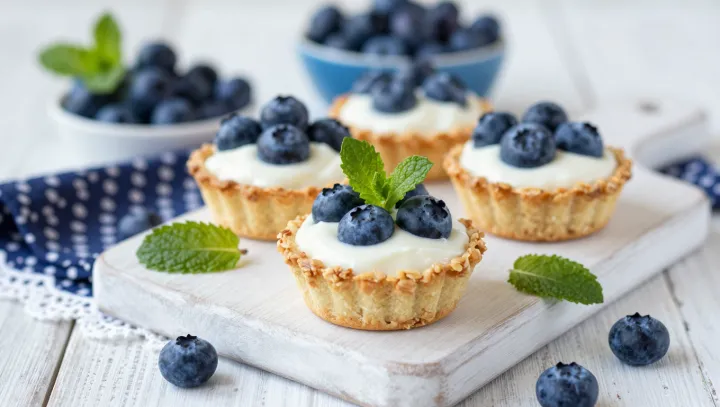
A thick filling can still defeat a crisp granola shell. The culprit is water, not a lack of firmness: yogurt and other creamy fillings contain moisture that gradually moves into the drier oats, even when the filling holds its shape. Texture is deceptive. A cup that looks sturdy can soften before the first bite.
The decisive difference is water activity, a measure of how available water is within a food, rather than how liquid that food appears. Moisture migration occurs when water moves from a region of higher water activity toward one of lower water activity. Crisp oats readily absorb it. As they take up moisture, their brittle structure becomes more pliable, and the crunch fades. Fresh blueberries can contribute moisture too, particularly where cut or damaged fruit touches the shell.
A thin coating offers a practical defense, not an impenetrable shield. Brush the cooled shell with melted chocolate or cocoa butter, covering the inside and any gaps, then let the coating set before adding the filling. Fat slows water transfer because it does not readily mix with water, although cracks and exposed oats leave routes for moisture to enter. Coverage matters more than thickness. Fill the cups close to serving, keep perishable fillings refrigerated, and add dry, intact berries at the end. How long would you wait before taking that first crunchy bite?