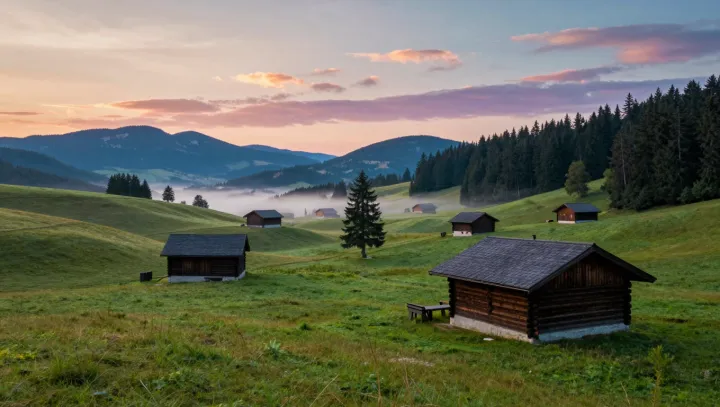
Some of South Tyrol's most open pastures owe their existence not to wilderness, but to farming. Without grazing or mowing, many meadows below the natural tree line gradually give way to taller vegetation, shrubs and, eventually, trees. Grass is not the final chapter.
The animals do more than crop the view. By eating vegetation and disturbing soil, livestock can limit woody growth and create small openings where light reaches the ground. This slows ecological succession, the gradual replacement of one plant community by another. When farming stops, accumulated litter and expanding shrubs can shade out low-growing herbs and flowers adapted to open ground. Plant diversity often falls as a few vigorous species become dominant, though the pace and outcome depend on altitude, soil and past management.
Abandonment is not a uniform sentence. Above the natural tree line, cold and exposure can keep ground open without livestock; elsewhere, returning woodland may support different species, even as grassland specialists disappear. Grazing itself demands restraint: too many animals can compact soil and favor a narrower set of plants. Not all grazing helps. The choice is less between nature and farming than between different communities of life, each sustained by particular conditions. Beside a wooden cabin, a flower-rich meadow can look effortlessly permanent; its openness may be the quiet work of animals passing through.