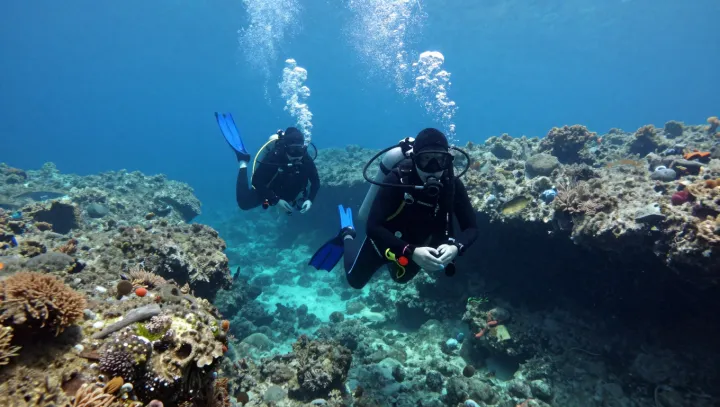
The surface is not always safety. A diver can leave a rocky seabed, breathe freely in open air and still face a threat set in motion below. The pressure has fallen, but the body has not yet finished adjusting to that change.
The danger lies in the delay. At depth, a diver breathes gas at increased pressure, allowing more nitrogen to dissolve in blood and tissues. During ascent, the surrounding pressure falls, and that nitrogen must leave the body through the lungs. If it comes out of solution faster than it can be cleared, bubbles can form or grow, much as dissolved gas escapes when a bottle is opened. This process, called decompression, can injure tissues and disrupt blood flow. Symptoms may appear after surfacing, including joint pain, unusual fatigue, dizziness, weakness or trouble breathing.
Good planning reduces risk; it cannot abolish it. Depth, time and ascent rate matter, and divers use training, dive computers or tables to manage their exposure. A safety stop can provide additional time for nitrogen to leave the body, though no procedure guarantees immunity. Symptoms after a dive deserve urgent medical assessment: seek emergency help, give oxygen if available and administered by someone trained, and do not return to the water to treat symptoms. Recompression in a hyperbaric chamber is a standard treatment when indicated. Above the water, the dive can still have its unfinished business.