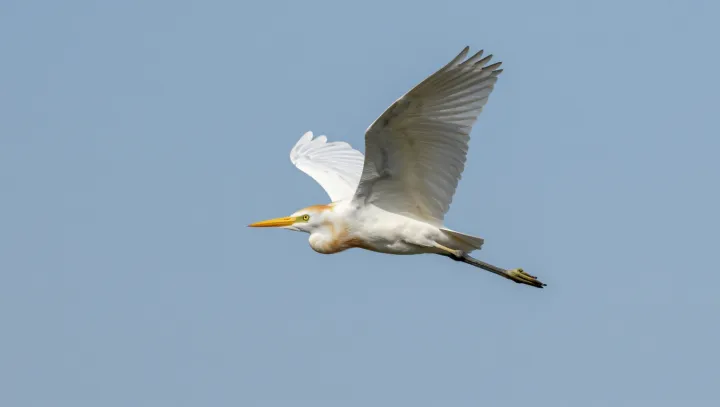
Cattle egrets owe much of their success to an unlikely hunting partner: a grazing animal that does not know it is helping. Each step through grass sends insects into motion, giving the birds a chance to catch prey that might otherwise remain hidden. The cattle generally carry on unaffected.
This is a bargain with one clear beneficiary. Ecologists call it commensalism, an association in which one species benefits while the other is generally unaffected. The birds follow cattle and other large grazers, snapping up grasshoppers, crickets and other small animals disturbed by their movements. Less effort, more food. They sometimes take ticks from livestock, but insect hunting in disturbed vegetation is a principal advantage of the association. Not every relationship in a pasture needs a shared reward.
The ocean was less of a barrier than it looked. Originally native to parts of Africa and Eurasia, cattle egrets reached South America through natural dispersal, with winds likely helping birds cross the Atlantic. From there, they spread across the Americas. Flight opened the door. Grazing livestock helped keep it open: pastures offered feeding grounds, while herds supplied the moving feet that flushed prey. Dispersal carried the birds across water; suitable habitat helped them establish populations after arrival. The pattern was not a simple dependence on cattle, since egrets also forage alongside wild grazers and use other feeding sites. Still, in a pasture far from their ancestral range, white birds gather around the slow machinery of a herd.