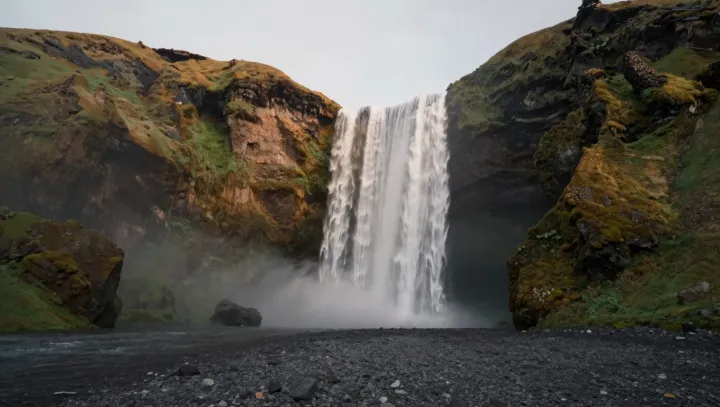
Skogafoss is a coastal landmark stranded away from the coast. Its broad curtain of water drops about 60 meters over a cliff that once met the sea, while spray gathers at its base. The cliff stayed put; the shore did not.
The retreat of the shoreline is less a story of a wandering ocean than of several forces working together. Waves cut into the rock when the sea reached the cliff, leaving a steep face that the Skoga River later spilled over. As glaciers melted, isostatic rebound lifted land that had been pressed down by ice. Relative sea level changed as well: it depends on both the height of the ocean and the movement of the ground beneath it. Neither acts alone.
The flat ground below the falls adds another part to the story. Rivers and glacial meltwater carried sediment toward the sea, building coastal plains outward through deposition; volcanic material also supplied sediment to parts of southern Iceland. The balance of uplift, sea-level change and sediment supply varied across the region, so the waterfall cannot be used as a precise measure of any single force. It records a shifting boundary instead. At Skogafoss, water still falls over the old edge, but the waves that helped make it have gone.