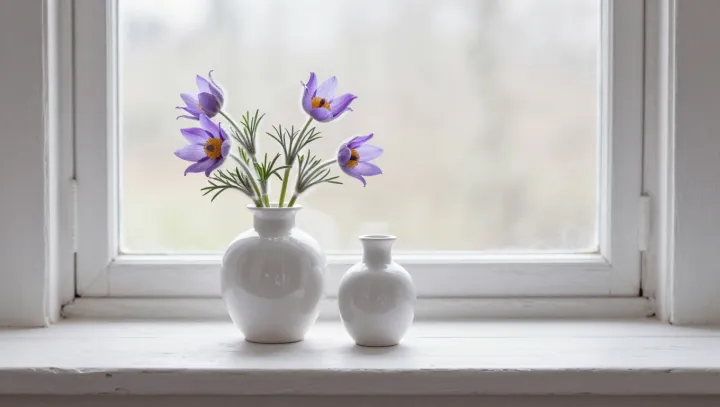
The silk comes twice. First it coats the stems and buds of the pasque flower; later, after the purple blossoms and golden centers have faded, it gathers into a pale, feathery seed head. What looks like a second flowering is instead the beginning of a journey.
The plumes are more than decoration. Pasque flowers, close relatives of anemones, produce clusters of dry, single-seeded fruits called achenes. Each bears a persistent style, the elongated remnant of a flower part that once connected the stigma to the ovary. After flowering, the style lengthens and develops feathery hairs. The change makes sense. Rather than abandoning reproduction when its petals fall, the plant refashions part of the flower into equipment for dispersal. As the fruits mature, the spreading plumes form the familiar silvery head.
Wind offers opportunity, not certainty. The hairs increase the surface exposed to moving air, helping an achene detach and travel away from its parent plant; where it lands still depends on the wind and the ground below. Some may go only a short distance. Separation can reduce competition with the parent for light, water and space, although a seed must still reach a suitable site and germinate. The delicate structure has another possible role: in some pasque flower species, changes in moisture cause the tail to twist, helping work the fruit into soil. A fading bloom leaves behind not an ending, but a small fleet waiting for weather.