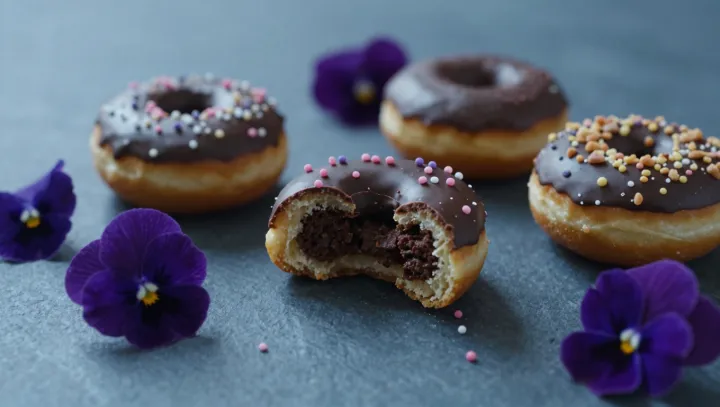
The chocolate cake doughnut owes its tenderness to hot oil, not despite it. Beneath the coating, a soft crumb rises as heat drives moisture into steam and activates chemical leavening, while the surface sets quickly enough to hold the doughnut together. The contrast is the point.
The dough deserves more credit than the fryer. Unlike a yeast doughnut, a cake doughnut typically relies on baking powder or another chemical leavener to produce carbon dioxide, which expands existing air pockets as the dough cooks. Steam adds pressure too. Meanwhile, starch gelatinization and the setting of egg and flour proteins give those pockets structure. The result resembles cake, although heat reaches it through oil rather than oven air. Mixing matters just as much: excessive handling develops gluten, the protein network that can make the finished doughnut chewy instead of tender.
The coating is more than decoration. A chocolate glaze supplies a smooth counterpoint to the crumb, while sprinkles bring a little crunch and color; neither can rescue a doughnut that has absorbed too much oil. Temperature makes the difference: oil that is too cool can leave the exterior greasy, while oil that is too hot may brown the outside before the center cooks. Once drained and cooled enough to hold its finish, the doughnut carries the evidence of its making in every bite. A crisp edge yields to a softer interior, and the bright sprinkles remain scattered across the dark surface.