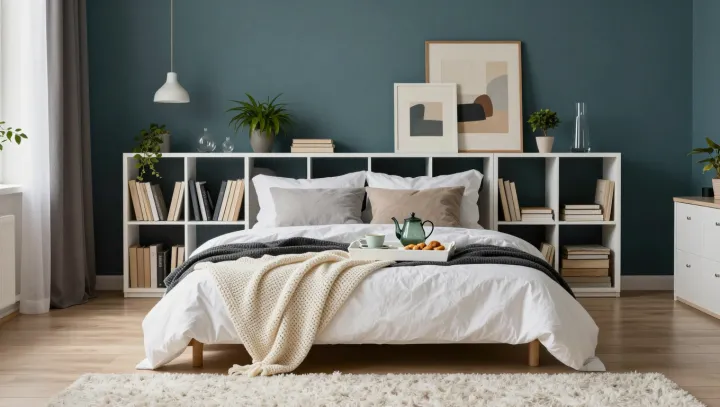
A room with less furniture can feel more inviting, not less. Space gives the eye somewhere to rest, while a deep teal wall lends simple white furnishings a sense of definition. The trick is restraint with purpose: each surface and object must contribute something that clutter would otherwise obscure.
Texture does the work that extra furniture cannot. A linen duvet, a wool throw and a soft rug give the bed and floor distinct surfaces, catching light differently and making a pared-back room feel less austere. Layering matters more than quantity. Leave the weave of a blanket visible rather than burying it beneath cushions; the contrast between smooth furniture and tactile fabric makes both easier to notice. Houseplants add another kind of irregularity, their leaves breaking up the straight lines without crowding the room.
Lighting is the quiet editor of the scheme. A warm bedside lamp softens the teal wall and brings out the folds in the bedding, while daylight keeps white furniture from feeling heavy. Consider color temperature: warmer light tends to make a room appear more intimate, though a dimmer switch gives its occupant control over the effect. Contrast needs space to breathe. A pale bed against the dark wall creates a clear focal point, leaving the rest of the room free of visual competition. In that stillness, an empty corner becomes part of the comfort.