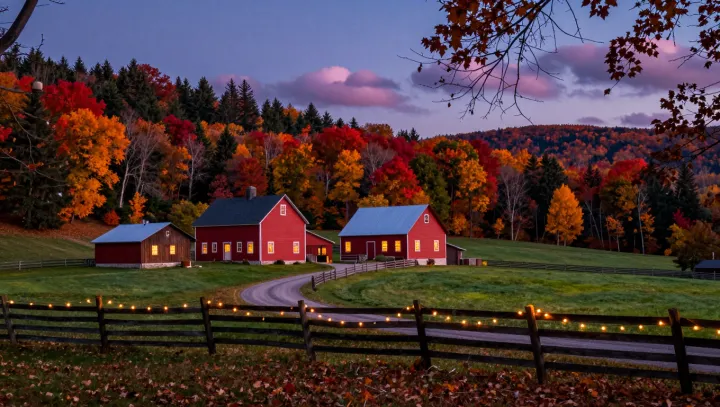
The farmstead may freeze first, though the hillside rises above it. As evening settles over the fields and the farmhouse and barns glow beneath autumn foliage, the ground begins losing heat. On a clear, calm night, that loss can turn the lower fields into a trap for cold air.
Elevation is only part of the story. After sunset, radiative cooling chills the ground, which in turn cools the air touching it. Denser than the warmer air above, that air flows downhill under gravity in a process called cold air drainage. Where the slope levels out, or where a hollow or obstruction slows the flow, cold air can collect. The result is a temperature inversion: air near the ground becomes colder than air higher up. A field farther up the slope may sit above this pool and escape the worst chill.
The thermometer alone can mislead. Leaves and other exposed surfaces can cool below the surrounding air temperature, allowing frost to form even when a nearby air reading remains above freezing. Cloud cover tends to reduce surface heat loss, while wind can mix the air and weaken an inversion; neither makes frost impossible. For a grower, the shape of the ground matters as much as the forecast. A low field may need closer monitoring than a higher one, particularly where tender crops remain exposed. Above the barns, the hillside holds its color; below, the field waits for morning.