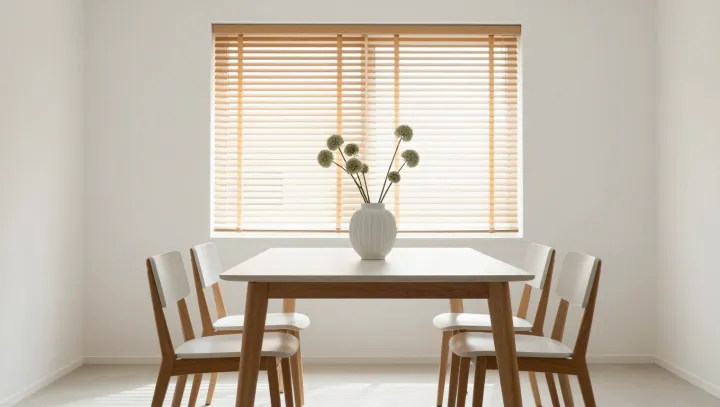
White alone can feel strangely lifeless. A dining room with pale walls and furnishings may appear spacious, yet when every surface reflects light in much the same way, the eye has little variation to follow. The remedy is not more decoration. It is a quieter play of shadow, grain, and contrasting finishes.
Wood does the heaviest lifting. A warm timber table introduces visible grain and color against white surfaces, giving the room a natural focal point without crowding it. Keep the contrast restrained: a consistent wood tone can connect the furniture rather than making each piece compete. Matte and lightly textured finishes add another layer, catching light differently from smooth paint or polished surfaces. Blinds matter just as much. Their slats break daylight into bands, and a small adjustment can shift the room from evenly bright to softly shaded. Leave them open when a clear view is the priority; tilt them when the space needs gentler light.
A centerpiece should earn its place. A simple vase of flowers brings an irregular shape to a room otherwise defined by straight edges, while leaving enough table space for a meal. Choose a modest arrangement and let the stems remain visible rather than building a dense display. You can also change the flowers without changing the room: pale blooms preserve the calm palette, while a deeper color adds a temporary accent. The result is minimalism with some give. Would you rather dine in a room that stays perfectly composed, or one that changes a little with the light?