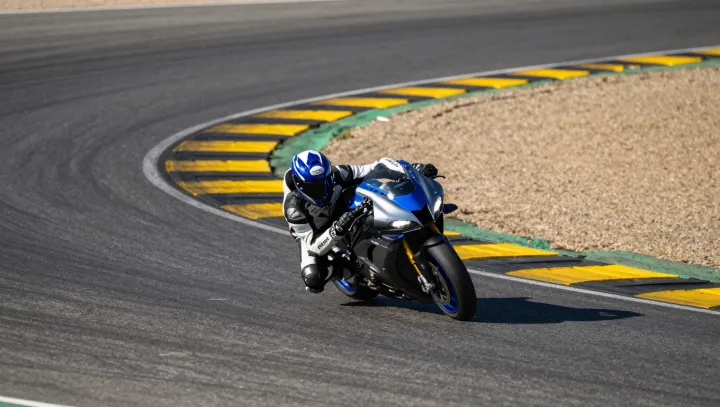
The motorcycle need not lean as far as its rider. That distinction sits at the heart of performance cornering: when the rider shifts toward the inside of a turn, the combined center of mass moves inward relative to the machine, changing the lean angle the motorcycle needs to maintain balance.
The governing physics is less theatrical than the posture suggests. At a given speed and corner radius, the tires must provide the centripetal force that bends the motorcycle's path, while gravity pulls the combined mass downward. The direction of those forces determines how far the combined center of mass must lie inward from the tire contact patches. The motorcycle is only part of that combined mass. Move the rider inward, and the machine can sit more upright while the combined center of mass remains in the position required for the turn. The corner has not become gentler. The speed and radius still set the same lateral acceleration, and the tires must still supply the necessary grip.
The benefit is room, not immunity. A more upright motorcycle can retain more clearance between its hardware and the track, reducing the chance that a footrest or another component touches down; tire behavior, suspension and surface conditions still matter. Body position does not create extra traction by itself, nor does it remove the consequences of entering a turn too fast. In the image of a Yamaha sweeping through a corner, the visible lean is only part of the story: rider and machine share a balance that neither can reveal alone.