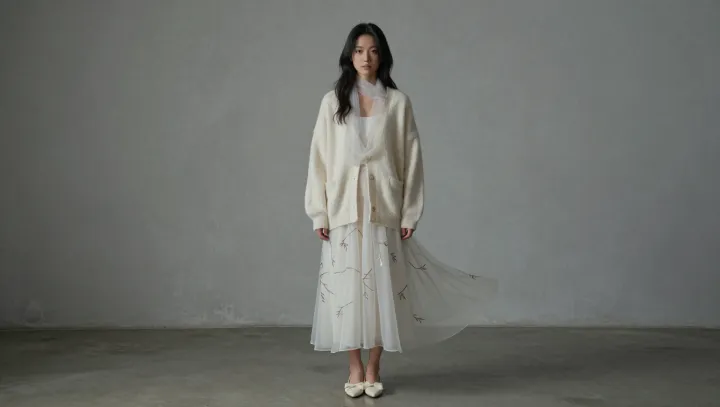
An all-white outfit can be more visually complex than a colorful one. The contrast is simply harder to name: a loose, textured top sits above a flowing patterned skirt, while pale shoes keep the eye moving rather than interrupting it. Color steps aside. Surface and shape take over.
Texture is the outfit's quiet provocateur. Raised or uneven surfaces scatter light differently from smoother ones, making folds and details visible even when the garments share a similar hue. In the language of optics, diffuse reflection softens light across a surface, while specular reflection produces more concentrated highlights. The balance depends on the fabric and the light falling on it. A skirt's pattern adds another layer of variation, giving the eye something to follow without requiring a dramatic change in color.
Silhouette does the work that color cannot. The relaxed top creates volume around the upper body; the skirt extends that volume downward in a different rhythm, with its flowing shape bringing movement to the composition. The pale shoes offer a restrained finish rather than a sharp visual boundary. Proportion matters here. If every piece fell with the same weight and line, the outfit could read as a single mass; the distinction between top and skirt gives it definition. In shifting light, the white remains, but its shadows keep changing.