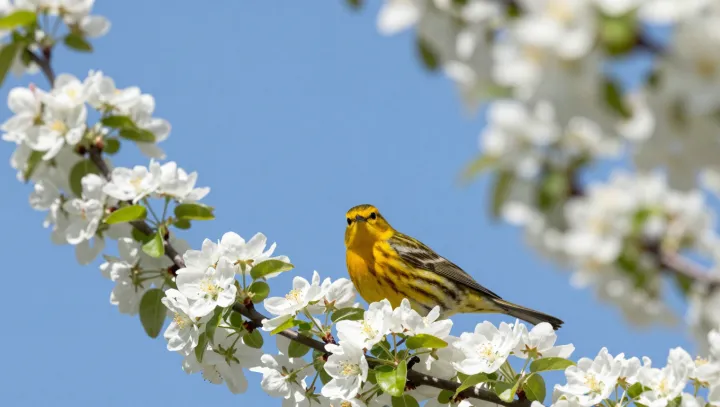
A yellow warbler may bury its own eggs to defeat an intruder. The sacrifice is real. When a brown-headed cowbird lays an egg in its nest, the warbler sometimes builds a fresh floor over the entire clutch, sealing away the cowbird egg and any of its own already laid.
The apparent waste is a form of defense against brood parasitism, in which one species leaves its offspring for another to raise. Cowbird chicks often hatch earlier and grow faster than warbler chicks, competing for the food their foster parents bring. The odds can be punishing. By burying a parasitized clutch and laying again, a female warbler may exchange an immediate loss for a better chance of raising her own young. Not every response is so drastic: warblers may also desert parasitized nests, and some raise cowbird chicks.
This is no flawless act of recognition. Yellow warblers respond to cowbirds near their nests, but nest burial does not mean they can always identify an individual cowbird egg or escape another visit. Building again takes energy, and a replacement clutch demands more investment. The male, bright yellow with reddish streaks across his breast, may still sing among the blossoms while the female tends the new nest. Beneath its woven floor lie the eggs she could not save.