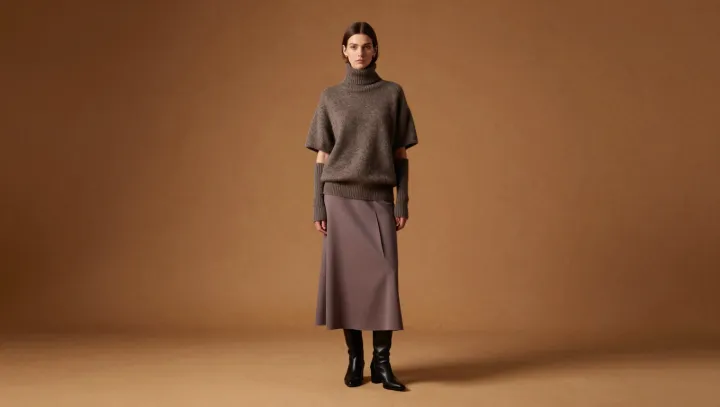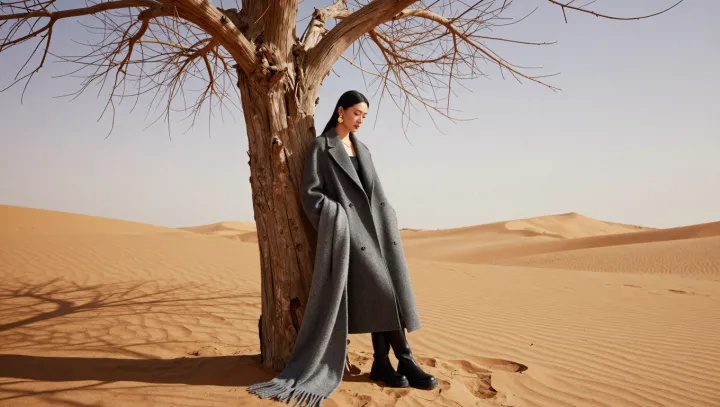
A long coat can be a sensible answer to desert sun, however contrary it looks beside bare sand. Coverage changes the calculation. In a scene of warm dunes, a woman in a gray overcoat and black boots makes the point visually: the fabric stands between her skin and a fierce source of radiant heat.
The most useful layer is not necessarily the thickest. Solar radiation heats exposed skin directly, while a covering intercepts some of that energy before it reaches the body. Loose fabric can also leave an air gap that limits heat transfer from the hot outer surface. Fit matters here. When air moves through an open garment, convection can carry heat away and help sweat evaporate, provided conditions allow it. A tight or poorly ventilated coat can instead trap heat and moisture.
The photograph is better read as a lesson in tradeoffs than as a prescription for dressing in extreme heat. A heavy coat may become uncomfortable, especially during exertion, and dark boots can absorb sunlight. Fabric weight, breathability, color and the temperature of moving air all affect the outcome; when the air is hotter than the skin, wind can add heat rather than remove it. Shade and water still matter. Against the dunes, the gray coat makes a quiet argument: protection sometimes begins with what stands between the body and the sun.