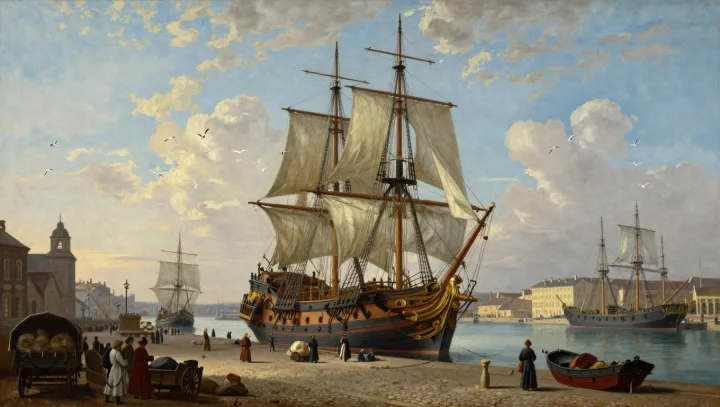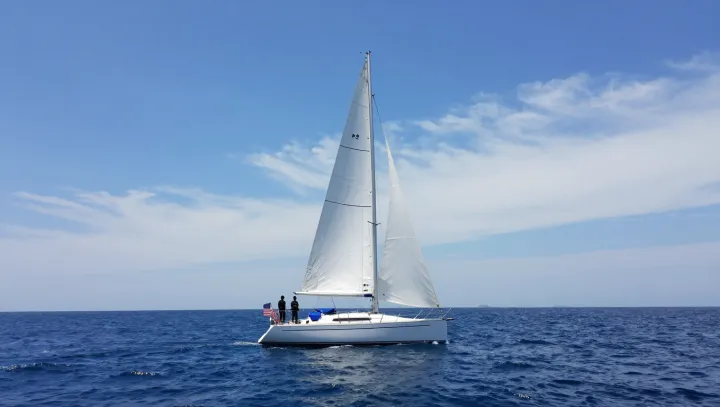
A sailboat can advance against the wind without defying it. The trick is indirect. Its sails turn moving air into a force that pulls partly forward and partly sideways, while the keel resists much of that sideways motion. Together, they turn a seemingly impossible destination into a reachable one.
The sail is more than a surface waiting to be pushed. When wind flows around its curved shape, pressure differences produce aerodynamic lift, a force roughly perpendicular to the airflow that the sail feels. That airflow, called apparent wind, combines the true wind with the airflow created by the boat's own motion. The keel earns equal credit. As water flows past it, the keel produces hydrodynamic lift that opposes much of the sail's sideways force, leaving a forward component to propel the hull. Drag and leeway still exact a price: the boat slips sideways and loses some energy to resistance.
The direct route remains closed. Point too close to the wind and the sail loses its useful shape and flutters, depriving the boat of drive. Instead, a sailor steers at an angle to the wind, then turns the bow through it onto the opposite angle, a maneuver called tacking. Each leg gains ground toward the upwind destination, though the zigzag covers more distance than a straight line. How close a boat can sail to the wind depends on its design, sail trim and conditions. Across the water, progress traces a series of patient diagonals.