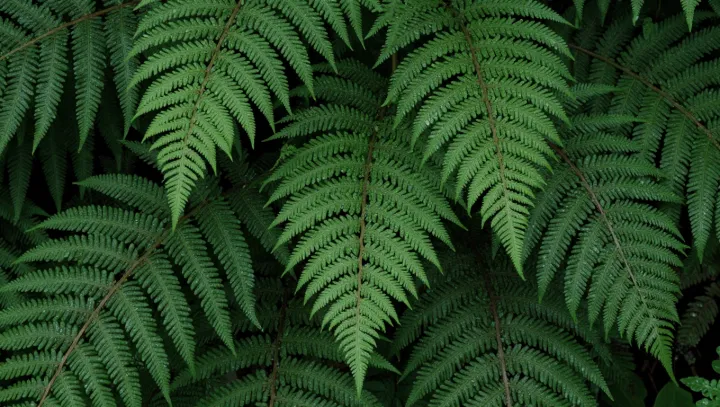
Water beads make the deception sharper. Along a fern-like compound leaf, droplets trace rows of small blades that appear to be separate leaves. They are not. Each blade is a leaflet, one part of a larger leaf whose boundaries are easier to find by following its stalk than by counting its shapes.
The bud is the better witness. A true leaf attaches to a stem at a node, and an axillary bud typically sits in the angle between the stem and the leaf stalk, or petiole. That bud can develop into a branch or flower. Leaflets, by contrast, arise along the leaf's central axis, called the rachis, without an axillary bud at the base of each leaflet. The distinction is structural, not a matter of size: a leaflet may be larger than another species' entire leaf.
The test rewards patience, not a glance. Follow a leaflet inward to the rachis, then trace the structure back to where its petiole joins the stem. Look for the bud there, although it may be tiny, concealed or absent in some plants; no single visible feature works in every case. Arrangement and attachment can supply supporting clues. The same logic applies when the leaf is divided more than once, with leaflets branching from smaller axes. What first looked like a row of leaves resolves into the architecture of one, each droplet resting on a fragment of the whole.