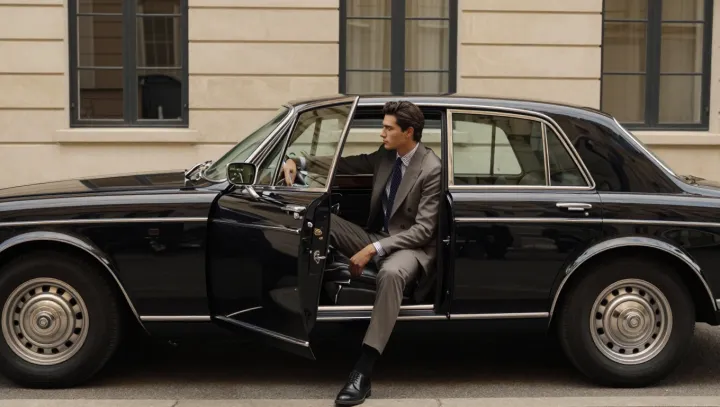
A trouser hem is only as tidy as the shoe beneath it. The difference can be striking. With a taupe double-breasted suit and black dress shoes, the trouser leg meets not an abstract length but a surface whose shape determines where the cloth stops and folds.
The shoe, not the measurement alone, often decides the result. A higher instep or a fuller vamp, the part covering the top of the foot, can catch the hem sooner than a lower, slimmer shoe. That contact creates a break: the fold in the trouser leg above the shoe. More contact means more folding. Leg width matters, too; a narrow opening has less room to fall around a shoe, while a wider one can settle farther down before the leather interrupts its descent.
The wisest fitting begins with the shoes that will see the most wear. Bring them to the tailor. Stand naturally while the hem is pinned, then walk and sit, since cloth shifts with movement and a length that looks composed at rest may behave differently in motion. A slight break suits those who want some contact without a deep crease; a shorter hem can keep the line cleaner, though it will expose more sock when seated. Neither is a universal answer. At the foot of the suit, precision is a negotiation between cloth and leather.