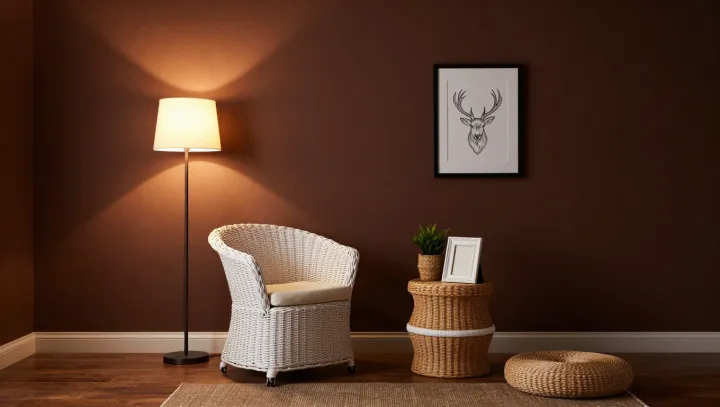
Brown walls give cream furniture its strongest voice. The effect is visual, not magical: a pale sofa reflects more light than the dark surface behind it, making the difference in luminance easy to see. The room gains definition without relying on sharp patterns or an abundance of color.
Contrast is doing more work than decoration. Through simultaneous contrast, the eye judges a surface partly by what surrounds it, so cream can seem brighter beside brown than it would against a pale wall. That impression joins a physical difference in reflectance: cream upholstery generally sends a greater share of incoming light back toward the eye. Woven fabrics complicate the picture. Their raised fibers catch light while their recesses hold shadows, giving a restrained palette enough variation to feel lived in rather than flat.
Warm lighting makes the pairing gentler, though it does not automatically erase the difference between dark and light. Lamps with a low correlated color temperature cast a more golden light, often giving cream a richer appearance and emphasizing the warmth of brown. Placement matters just as much. A lamp aimed at a sofa can heighten its separation from a dim wall, while light spread across both surfaces may make the room feel more even. The result depends on the fabric, the paint and the light reaching each. In the evening, the pale sofa seems to float against the wall, held there by a quiet bargain between shadow and light.