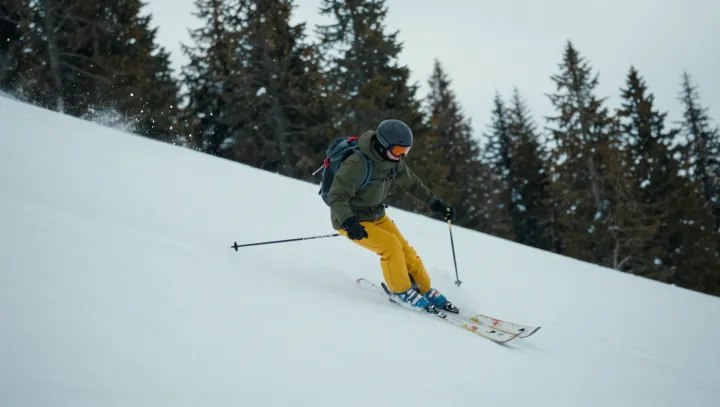
A turn can tame gravity without ever switching it off. That is the quiet bargain of downhill skiing: speed supplies the thrill, while the curved path across a slope gives a skier time and space to keep it under control. The mountain still pulls. The direction of travel changes.
The distinction is more subtle than a brake pedal. Gravity always pulls downward, but only its component along the slope accelerates the skier downhill. As the skis turn across the slope, less of that force acts in the direction of travel. Ski edges press against the snow, producing a sideways force that bends the path; friction and the work of pushing snow aside dissipate energy. A turn alone does not guarantee a slowdown. The skier can still gain speed if the descent adds energy faster than resistance removes it.
Control, then, is a matter of shaping the path rather than fighting the mountain. A longer turn across the hill reduces the rate of descent, giving friction and snow resistance more opportunity to slow the skier. Balance matters, too: smooth movements help the edges grip, while poles aid rhythm rather than serve as primary brakes. Snow conditions and steepness change the result, so a comfortable pace and terrain suited to one's ability leave room to adjust. For a moment, the tracks lie almost level, a line drawn across the mountain's pull.