The thickness of oat porridge is more than a matter of texture: it hints at a property that can alter how quickly glucose enters the bloodstream. The agent is beta-glucan, a soluble fiber that draws water into a viscous mixture as the oats cook. The spoon meets resistance.
The chemistry is deceptively simple. Beta-glucan molecules bind water and become entangled, increasing viscosity in the bowl; oat starch also absorbs water and gelatinizes during cooking, adding to the thickness. In the digestive tract, dissolved beta-glucan can make intestinal contents more viscous, slowing the movement of nutrients toward the intestinal wall. Glucose absorption can slow. The effect depends on the amount and properties of the fiber, as well as the rest of the meal; a thick breakfast does not guarantee a particular blood glucose response.
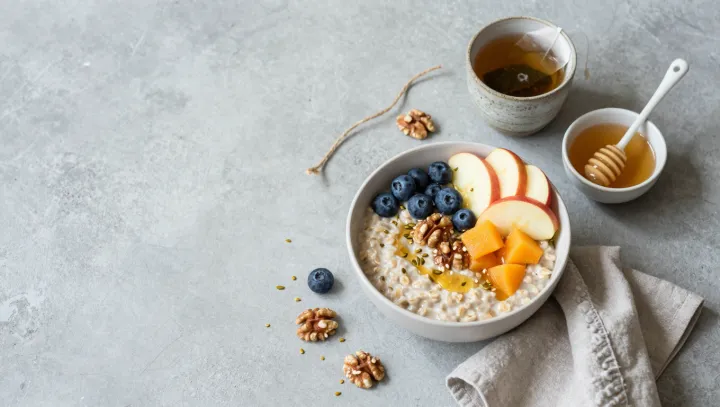
Texture, though, is only part of the appeal. Blueberries bring bursts of juice, apple adds bite, and walnuts and seeds offer crunch alongside unsaturated fats and other nutrients. Fruit also supplies carbohydrates, while sweeteners and portion size can change the meal's overall effect on blood glucose. There is no magic bowl. Yet the contrast between the soft oats and their crisp toppings makes the science tangible: a breakfast can offer both pleasure and a slower journey through the gut. At the bottom of the bowl, the last spoonful holds its shape.