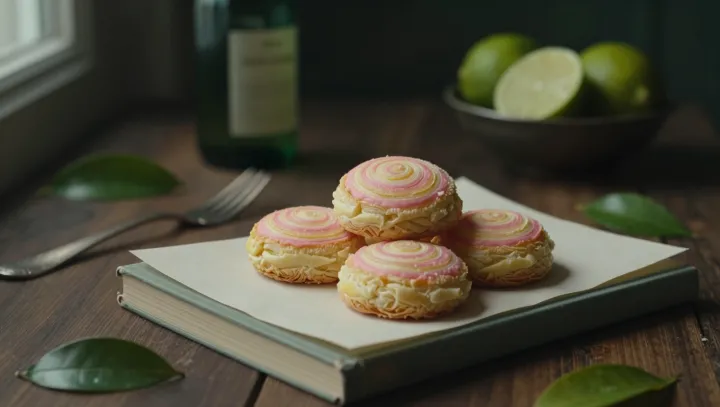
The spiral is more than decoration: its bands expose a structural wager made before the pastry reaches the oven. Each turn records how dough has been rolled and wrapped, and whether the layers remain distinct enough to lift rather than settle into a heavy mass. Color catches the eye. Separation decides the bite.
Lamination is the hidden architecture of a flaky pastry. Where sheets of dough are separated by fat, heat melts the fat and turns water in the dough into steam; that vapor expands, pushing the layers apart as the pastry sets. The layers need room. If fat becomes too soft and blends into the dough during rolling, those boundaries can disappear, leaving fewer places for steam to open pockets. Pressing too hard can also compress the stack, even when its colorful rings remain visible.
A neat spiral is therefore an imperfect promise. Dough that is worked excessively can develop a stronger gluten network, making it resistant to rolling and potentially tougher to eat; resting it can relax that network before shaping continues. Temperature matters as well. Keeping the dough cool enough to preserve distinct fat layers, without making it so stiff that it cracks, gives the pattern a better chance of becoming a delicate texture. A slice may display every turn with precision, yet the oven will render its own judgment on the spaces between them.