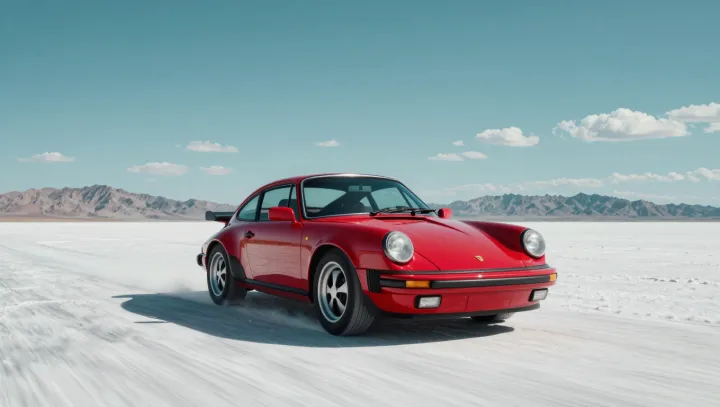
The Porsche 911 turns an apparent disadvantage into propulsion. With its engine behind the rear axle, a rear-wheel-drive model places substantial weight over its driven tires, helping them find purchase on a snowy surface. Under acceleration, weight transfer adds load at the rear. Grip, however, is not infinite.
That extra purchase comes with a bargain: the rear tires must also help the car turn. A tire has a limited friction budget, so demanding more acceleration can leave less grip available for cornering. On snow, where friction is low, that budget shrinks quickly. Once the rear tires lose enough lateral grip, the car can oversteer, with its tail moving outward and its nose turning more sharply than intended. Abruptly lifting off the accelerator can also shift load forward, reducing the rear tires' grip just when stability is needed.
Recovery can be less forgiving than the initial slide. Mass concentrated toward the rear contributes to rotational inertia, making a developing rotation harder to arrest once it has gathered speed. Tire choice, road conditions and driver inputs matter greatly; so do stability control and, on some models, all-wheel drive. None abolishes the limits of adhesion. On snow, a skilled driver leaves room for those limits rather than treating traction as a promise. The same weight that helps the car move forward can make its tail reluctant to follow.