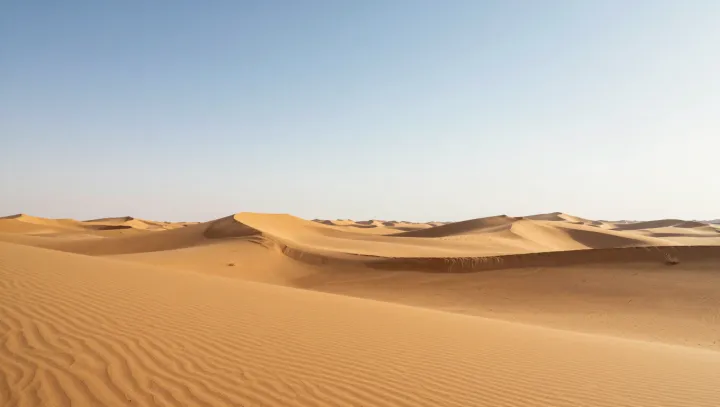
Bare ground stretches to the horizon, yet almost every grain of sand hides a negotiation with physics and biology. Deserts rank among the most energy-poor environments on Earth: low primary productivity, thin biomass, extreme swings in surface temperature and negligible precipitation constrain what can live there and how it can persist.
In this setting, survival depends on shaving losses at the margins of the basic metabolic rate and water budget. Plants reduce transpiration with microscopic leaf structures, deep taproots and resinous coatings, while animals rely on evaporative cooling, nocturnal activity and concentrated urine. Together they compress entropy increase by routing scarce energy and water through short, efficient food webs in which detritivores, microbes and fungi recycle almost every molecule.
The same efficiency makes these systems brittle. Biological soil crusts, or cryptobiotic crusts, knit cyanobacteria, lichens and mosses into a living skin that stabilizes dunes, fixes nitrogen and anchors seeds. One off-road tire track can rupture that skin, exposing loose mineral soil to wind erosion, breaking nutrient cycles and altering surface albedo. With recovery constrained by slow growth and rare rainfall events, that single mechanical disturbance can persist as a visible scar long after its cause has vanished from sight.