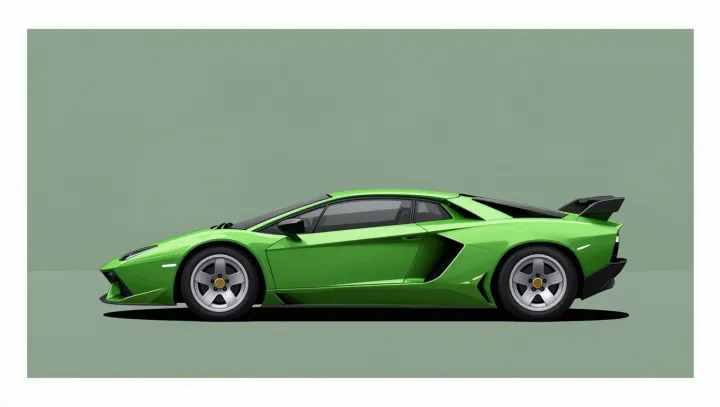
A slab of white bodywork, no rear window and a roofline like a paper plane: the Lamborghini Countach did not try to see behind itself. It chose a different job, turning the entire car into a single, aggressive vector aimed only forward.
That razor‑sharp wedge, drawn to minimize frontal area and manipulate airflow in basic fluid dynamics, told designers that appearance could be treated like a form of aerodynamics plus marketing. The cabin was pushed forward, the engine sat as a dense mass behind the driver, and the plan‑view became a pure arrow. Rear visibility collapsed, but brand visibility exploded as the shape rendered the car instantly legible from any distance.
By accepting terrible ergonomics and a compromised field of view, Lamborghini reset the cost‑benefit equation, almost like shifting the marginal utility curve of what a supercar is supposed to optimize. The Countach prioritized visual drag coefficient over human comfort, and that trade‑off hardened into a new norm: high beltlines, tiny glasshouse, massive rear haunches, and a cockpit sunk between structural tunnels. Successors from multiple brands copied the template because it created a clear design moat: if it looked like the driver could not see out, it looked fast enough to justify its existence.