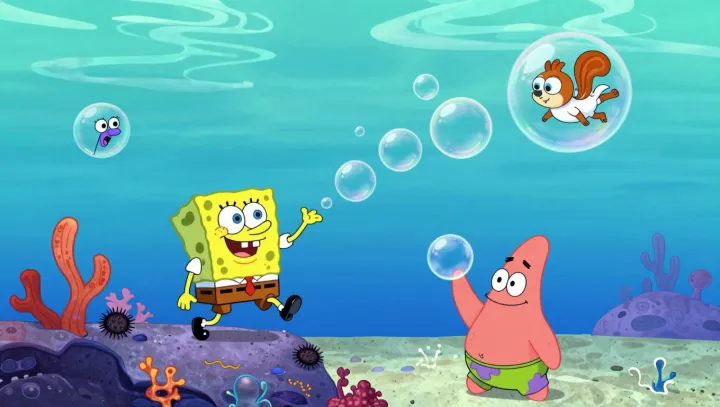
A land mammal walking freely on the ocean floor would be less a costume change and more a full-spec rebuild. In engineering terms, Sandy the squirrel would need her entire body turned into a living pressure vessel while still keeping mammalian muscles, nerves and joints functional.
The first constraint is hydrostatic pressure, which reaches thousands of times the load her skeleton and connective tissue evolved to handle. To prevent mechanical failure, her body wall would need a composite shell: bone-like lattice to carry compressive stress, elastic collagen layers to distribute strain, and internal fluids kept at near-ambient pressure to avoid crushing. This mimics metallic pressure hull design, but translated into continuous living tissue with dynamic stress redistribution instead of welded joints.
Thermal balance comes next. Deep water holds little heat, so her basal metabolic rate would need a major shift. Either engineered brown adipose tissue and dense fur-like insulation trap internally generated heat, or enzymatic systems are redesigned to operate at low temperature, changing protein folding dynamics and membrane fluidity. Ion channels, mitochondrial ATP synthase and synaptic transmission would all require cold-tolerant variants to keep neuromuscular control reliable for locomotion.
Respiration is the hardest constraint. Breathing surface air in a dome is structurally simple, but to move freely in open water she would need gill-like exchange surfaces with enormous area, ultra-thin diffusion barriers, and hemoglobin tuned for high oxygen affinity at low partial pressure. Her cardiovascular system must handle large stroke volumes without cavitation, and prevent nitrogen narcosis or decompression injury if she ever returns to lower pressure. Only with this trio of structural, thermal and respiratory redesigns does free movement at the real ocean floor move from cartoon to plausible bioengineering thought experiment.