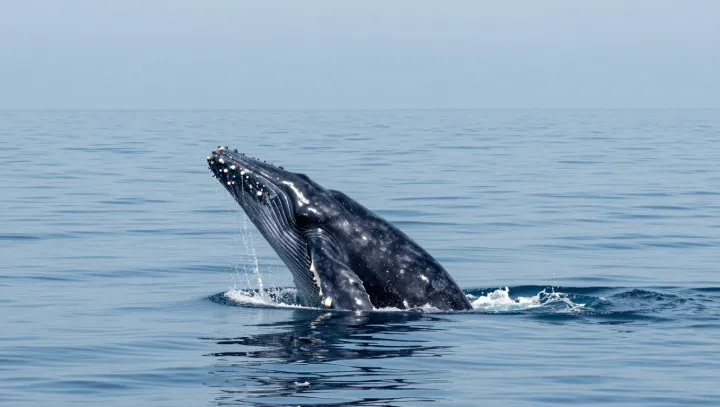
Each surfacing whale is a reminder that the largest ocean animals are, biologically, land mammals that moved back into the sea. Evolution did not give them gills; it retooled the ancestral nostrils into a single blowhole and kept the basic mammalian deal: oxygen comes from air, not water.
Whales rely on lungs and pulmonary alveoli rather than gill filaments. They inhale a large volume of air in one rapid breath, then dive while every cell keeps consuming oxygen. Their basal metabolic rate, scaled to enormous body mass, demands efficient gas exchange, so they extract a high fraction of oxygen from each breath and tolerate significant buildup of carbon dioxide and lactic acid between surfacings.
The blowhole is a streamlined nasal opening placed on top of the head, reducing drag and surfacing time. Muscular valves seal it under pressure, preventing water from entering the airways. Unlike fish, which use countercurrent exchange across gills, whales perform intermittent, high-yield ventilation cycles, more like marathon runners managing limited oxygen supply during sustained effort than like continuous-flow breathing machines.
Holding their breath is therefore not a quirk but a direct outcome of their mammalian ancestry and respiratory anatomy: lungs, not gills; nose, not water filter.