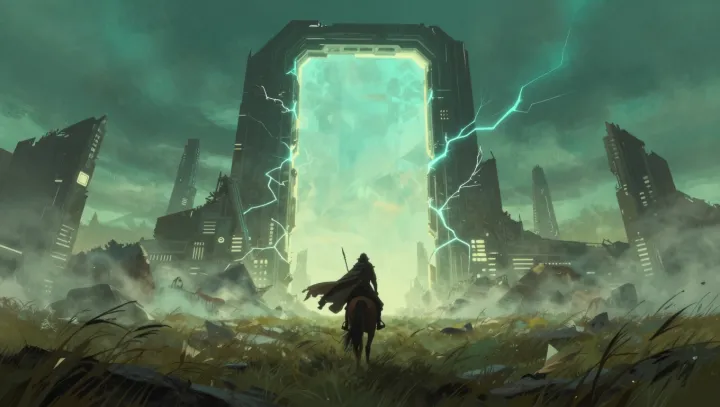
Tower forests, floating plazas and stacked highways often look like pure fantasy, yet many of these illustrated future cities are built on stricter physics and urban‑planning logic than glossy sci‑fi blockbusters. At the sketch stage, gravity, load paths and circulation patterns already shape what can be drawn without visually collapsing.
Illustrators who specialize in architectural and concept art routinely internalize basic structural mechanics and statics: vertical loads flow down cores, cantilevers keep credible support, and bridges show tension and compression in ways the eye subconsciously accepts. The same images often respect environmental constraints drawn from thermodynamics and fluid dynamics, such as wind corridors between tall buildings or solar exposure on facades, because breaking these rules makes the composition feel wrong even to non‑experts.
Urban‑planning principles are equally present. Street grids preserve permeability, transit lines form continuous networks, and mixed‑use layers hint at realistic population density and trip distribution rather than a few decorative skyways. Where films can hide implausible structures behind editing, motion blur and narrative urgency, a still illustration must sustain scrutiny as a frozen system in equilibrium. To avoid visual entropy and audience disbelief, many artists quietly run an intuitive feasibility check long before any spaceship flies past the skyline.