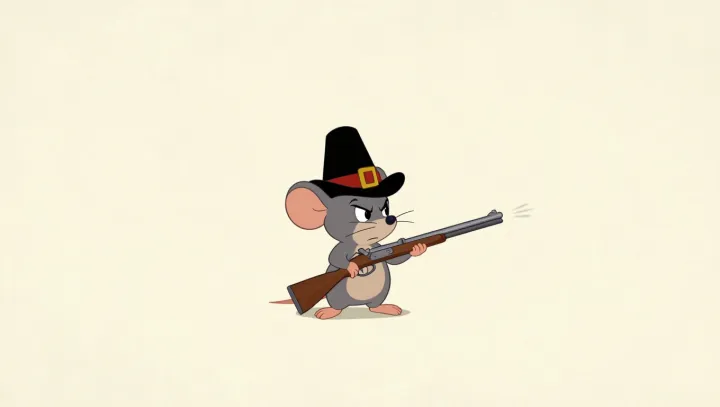
A chase across a living room became a de facto textbook for visual storytelling. Tom and Jerry, built almost entirely on sound effects and pantomime, refined timing and framing until each gag behaved like a physical equation. Cuts land on impact, anticipation stretches like elastic, and reaction shots arrive on the exact frame where the audience’s own startle reflex would peak.
Animation schools today still pause those sequences as if they were engineering blueprints, mapping arcs of motion and breakdown poses. The directors treated squash and stretch not as decoration but as a controlled experiment in inertia and kinetic energy: how far a body can distort before the eye rejects it as implausible. Even without dialogue, staging follows principles close to information theory, stripping away visual noise so a single silhouette or eyeline carries the entire joke.
In this stripped format, body language becomes both script and soundtrack. Weight shifts, micro‑pauses, and overlapping action form a kind of embodied grammar that later action franchises and CG animators still copy shot for shot. The cat never says a word, but his recoil, double‑take, and delayed fall encode a logic that reads as clearly as any line of dialogue.