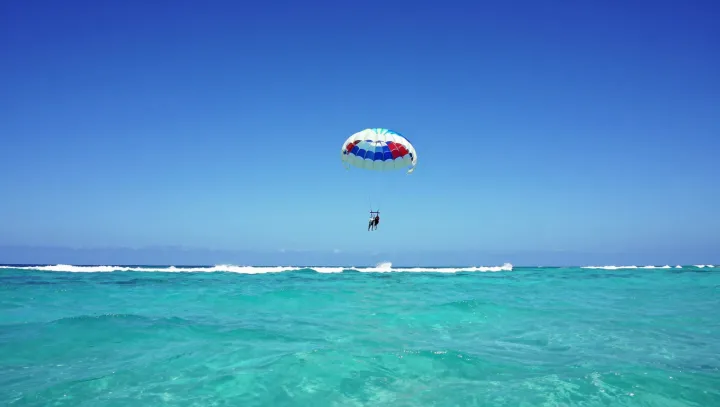
A bright chute pulling a person above a yacht can deliver more mental clarity in minutes than an extended meditation on a cushion. The contrast lies less in heart rate and more in how the brain allocates attention under stress. Parasailing drives the sympathetic nervous system, but that arousal compresses focus onto the present moment.
During a calm meditation, the default mode network continues to generate internal narratives, and only disciplined practice gradually quiets this self‑referential stream. In a parasail, the combination of vestibular input, visual motion and wind noise floods the sensory cortex and prefrontal cortex, leaving limited capacity for rumination. The stress response redirects blood flow and neuromodulators like norepinephrine, forcing a sharp, externally anchored awareness that mimics the intended outcome of mindfulness, but via a different route.
Acute spikes in cortisol and adrenaline activate survival circuits, yet once the harness feels secure and no real threat appears, the same arousal is reinterpreted as excitement. This rapid reappraisal updates threat predictions in the amygdala and creates a stark before‑and‑after contrast that meditation rarely matches in such a short window. The brain experiences a reset of perceived stress baselines, so the world on deck feels quieter not because it changed, but because neural noise has been recalibrated at its source.